Steward Farms · Marietta, Georgia
The Lab
We grow our own blackberry plants — clean, true-to-type, started from a piece of cane the size of a grain of rice. Here is how it works, and why a small family farm bothers to run a lab at all.
Steward Farms · Marietta, Georgia
We grow our own blackberry plants — clean, true-to-type, started from a piece of cane the size of a grain of rice. Here is how it works, and why a small family farm bothers to run a lab at all.
Most small farms buy their planting stock from a wholesale nursery and hope it comes in clean. We decided to grow our own instead.
The method is called tissue culture, or micropropagation. A tiny piece of a blackberry stem — a single growth bud — is surface-cleaned and set on a sterile nutrient gel inside a sealed jar. Done carefully, the young plant starts life without the viruses and diseases that quietly build up in field stock over the years. And because every plant is grown from the same mother tissue, they are all genetically identical — the exact variety, true to type, every time.
It is the same approach universities and large commercial nurseries use to produce clean stock. We just do it at kitchen-counter scale, with the varieties that have already proven themselves on our own ground in Marietta.
The lawn is a liability. The berry rows are an asset. So is knowing exactly where every plant came from.
Inside that sealed jar, a single node wakes up and begins to push a cluster of new shoots. Every few weeks those shoots are divided under a sterile work box and moved onto fresh gel. A small handful of clean starts turns into dozens, then hundreds — each one a copy of the last.
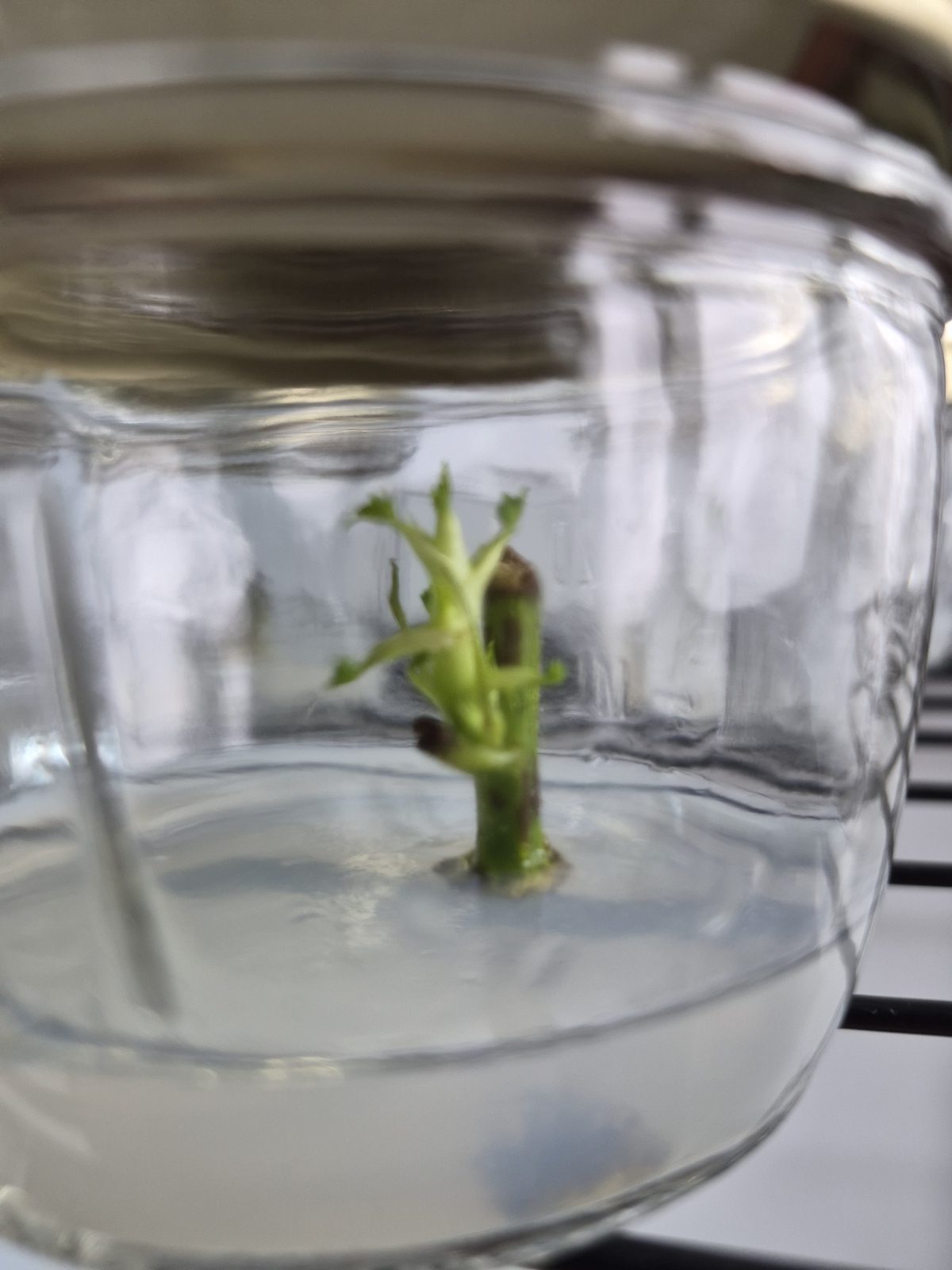
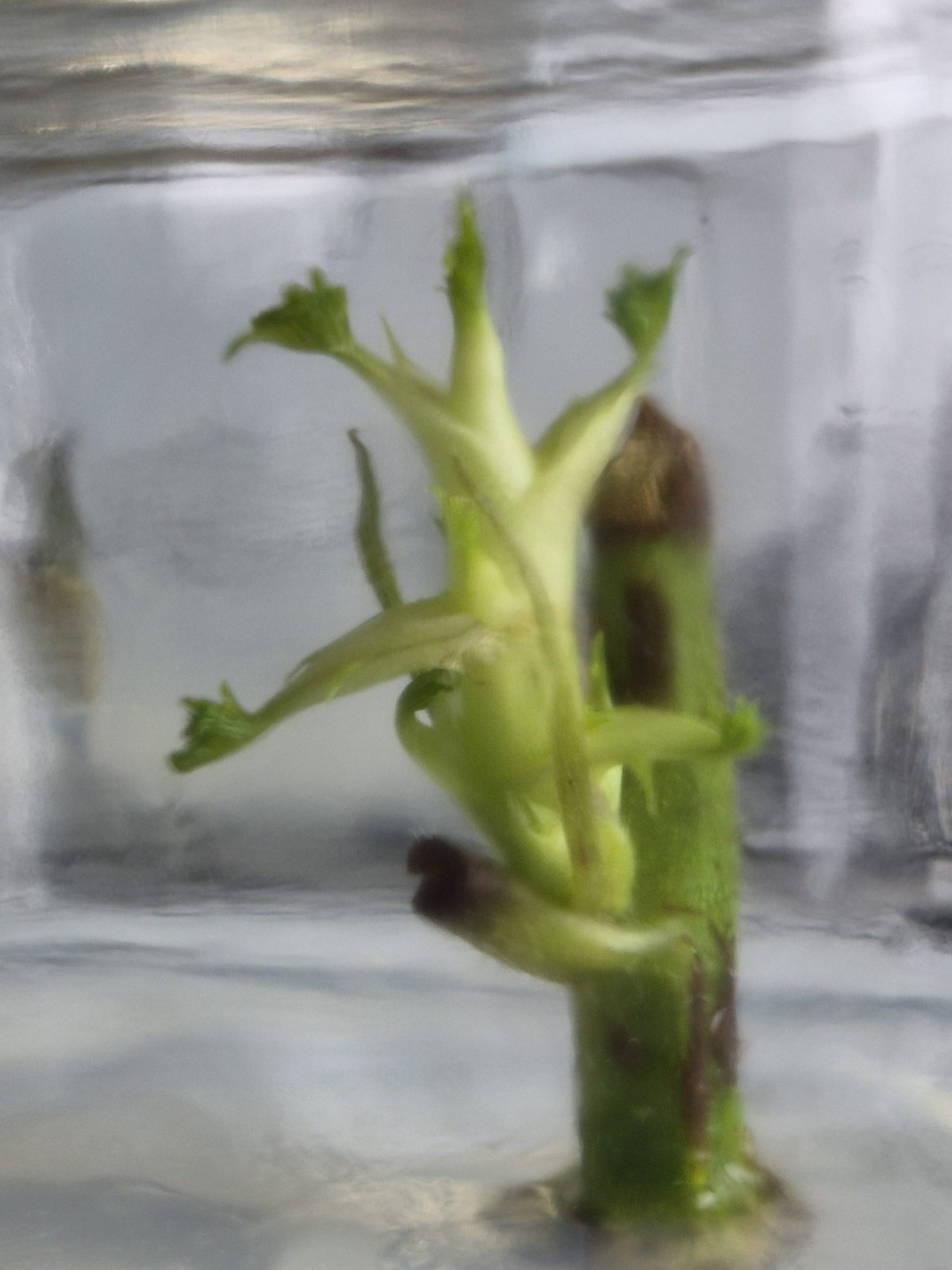
Start to a plantable blackberry is roughly five to six months.
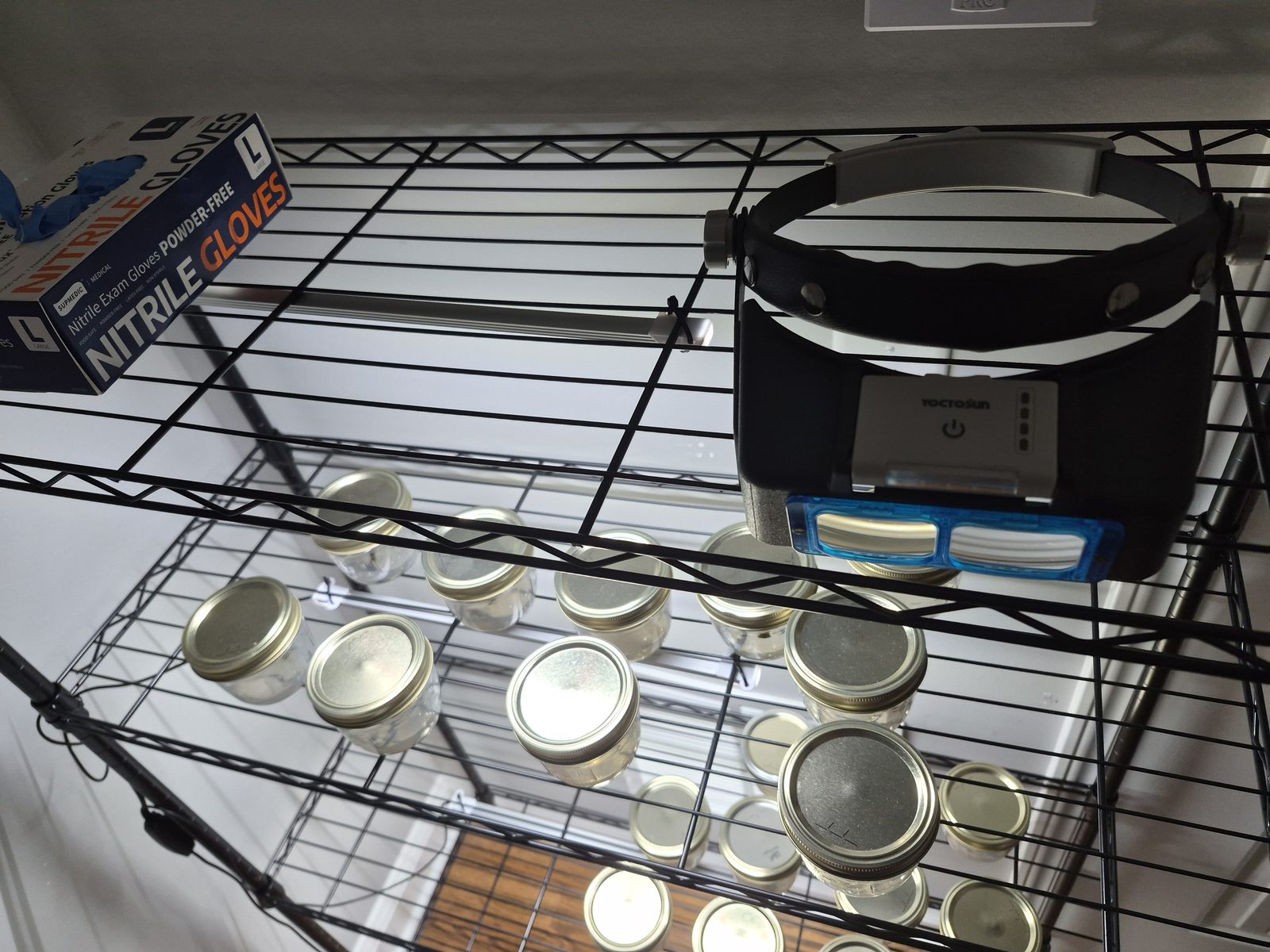
There is no institutional lab here. The whole operation is a sterile work box, a pressure canner to sterilize the media, and a wire rack under LED grow lights in a climate-controlled room. The culture vessels are half-pint canning jars.
Every batch is logged — how many starts went in, how many stayed clean, how many shoots each one produced. The contamination rate drops and the yield climbs with each round. That record is the real asset: a repeatable process, written down.
Plant availability will be local pickup in the Marietta area. No shipping at this time.
Batch updates, the good jars and the contaminated ones, and first word when plants are ready — live from the farm.
Follow Now