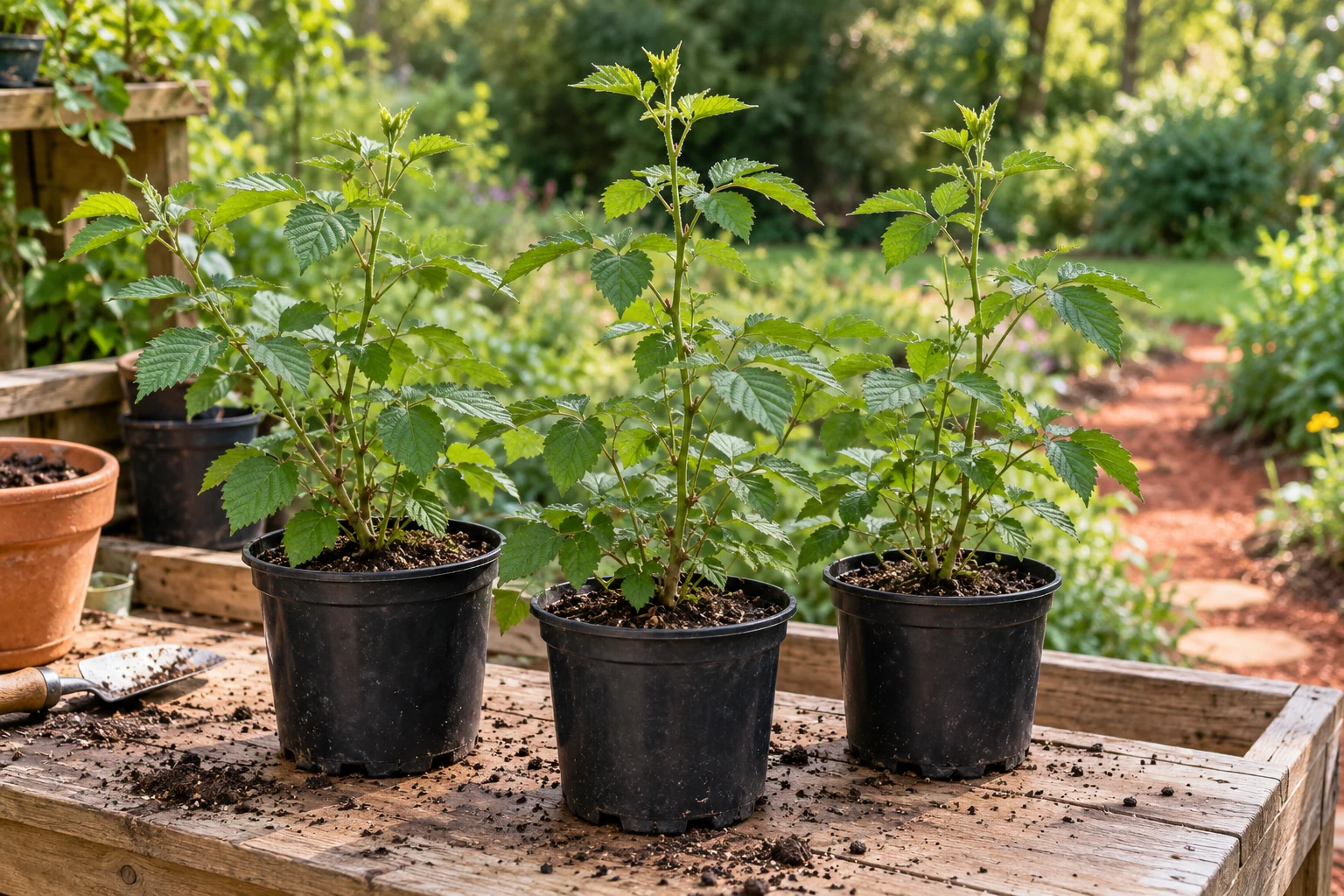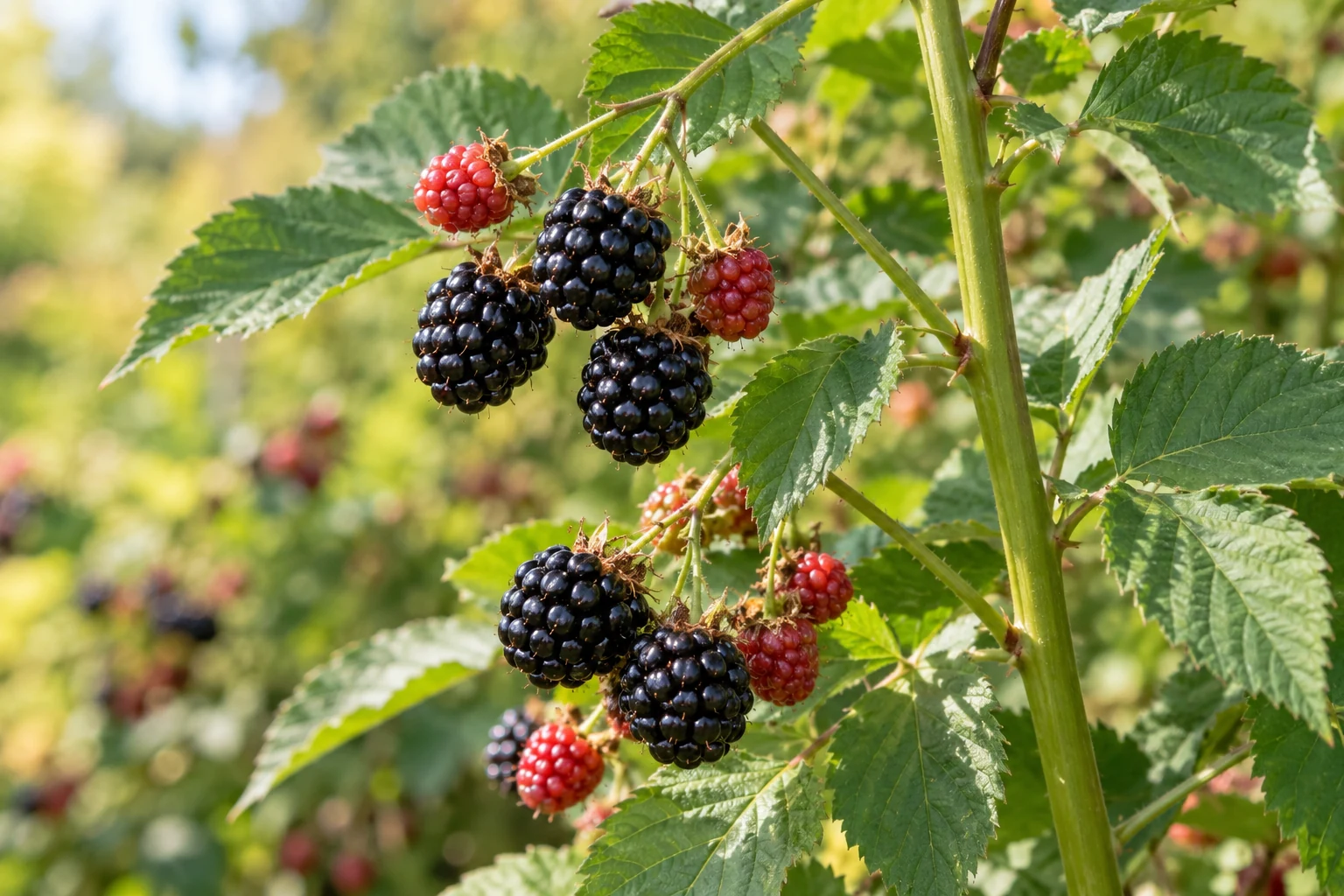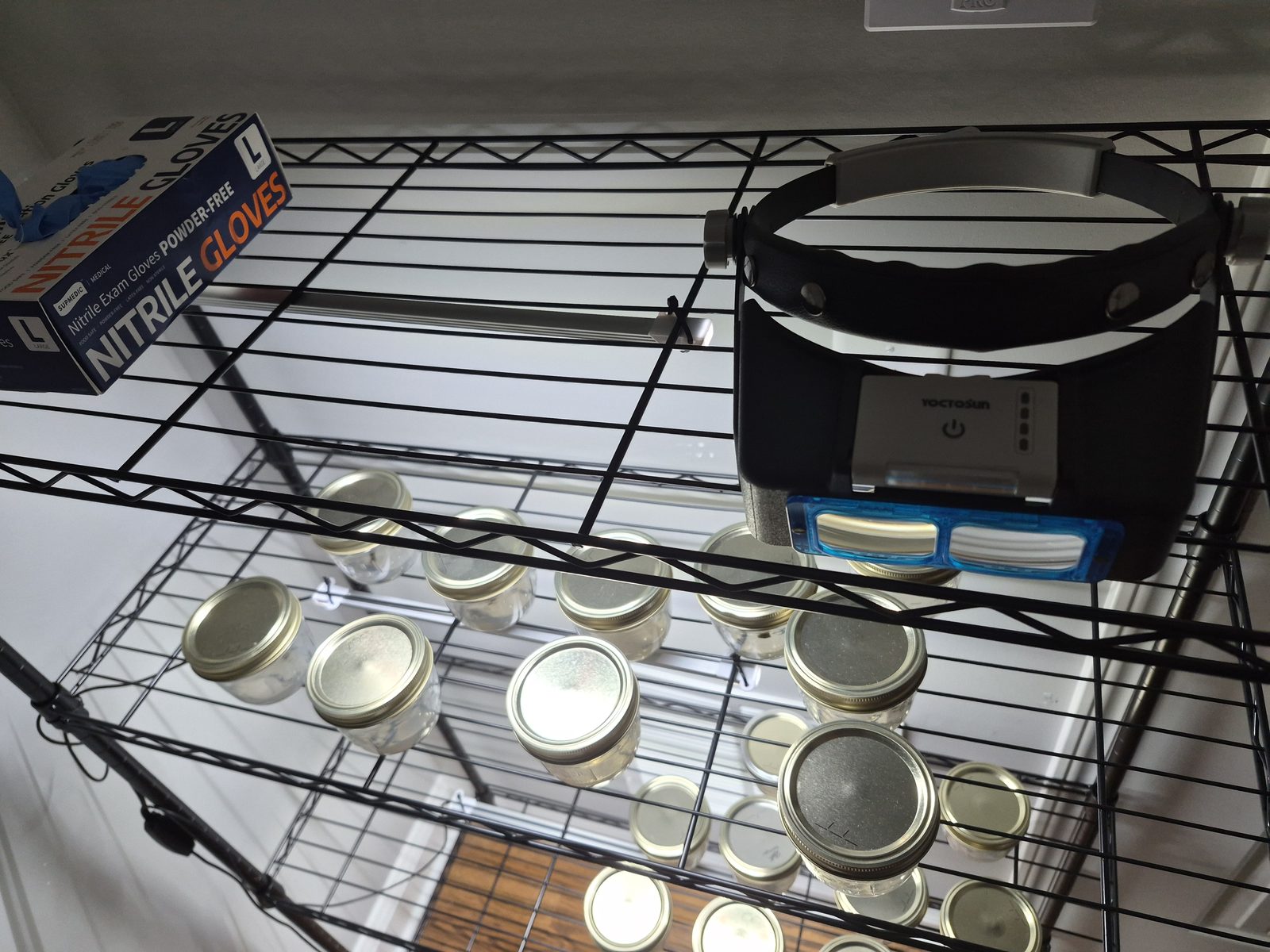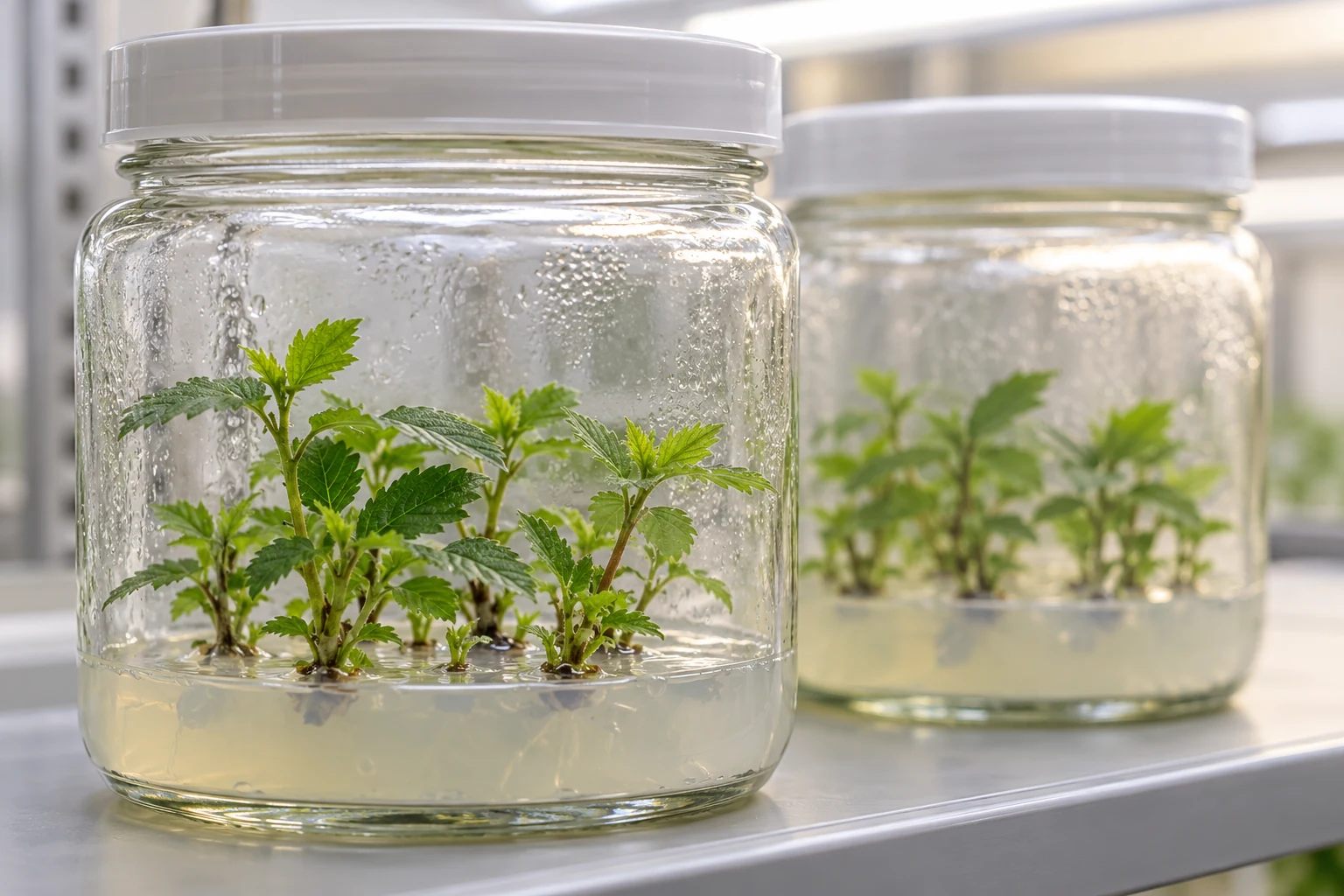
A blackberry shoot inside a culture jar can fit beneath a fingertip. The plant you hope to grow in the yard has a longer journey ahead of it.
That journey explains why a readiness date matters when buying tissue-culture blackberry plants. Growth passes through several stages, and each stage asks something different of the grower and the gardener.
At Steward Farms in Marietta, we’re growing the Ouachita variety through tissue culture. If you’re looking for blackberry plants near you, understanding that process can help you ask useful questions before pickup and prepare for the plant that comes home.
The jar begins the process
Tissue culture uses a small piece of plant tissue to grow shoots on a nutrient medium under controlled conditions. Growers use the process to multiply selected plant material while maintaining the variety through propagation.
Ouachita remains the variety throughout that process. The method describes how we grow the starts; Ouachita describes the blackberry we’re growing.
A shoot visible through glass shows progress. It still needs the stages that carry it toward a life outside the vessel.
Learn the words used in the listing
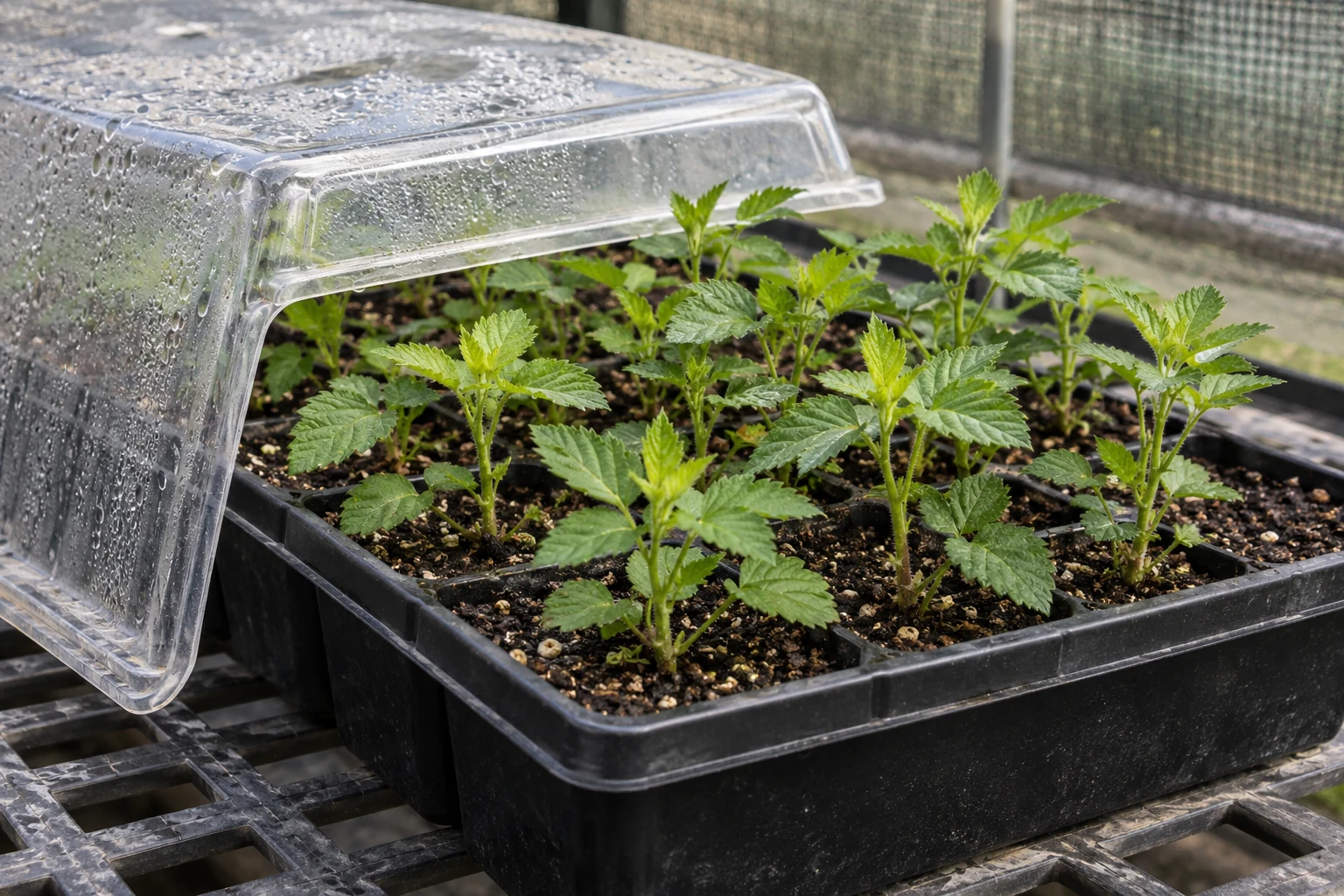
Plant listings can describe several points along the propagation process. “In vitro” refers to material still growing in a culture vessel. A “plug” describes a small rooted plant held in a cell of growing medium. A “potted plant” tells you that it has been moved into a container, though the description still needs to explain its size and condition.
Those words help identify what the seller is offering, but they don’t replace the rest of the description. Ask whether a plug has completed the adjustment required for its intended use. Ask how long a potted plant has been growing under its current conditions.
A gardener expecting a plant for a prepared outdoor bed should say so before ordering. A buyer equipped to grow on young material may be looking for a different stage. The useful choice depends on the care the buyer is ready to provide.
Read the listing with that next step in mind. The product should arrive with a clear explanation of where it belongs and what it needs after collection.
Roots and leaves must adjust
As a tissue-culture plant moves into potting medium, its surroundings change. The protected environment of the vessel gives way to air movement, different humidity, and stronger light. Acclimatization gives the plant time to adjust.
NC State’s regional caneberry guide advises hardening tissue-culture plug plants in a protected location before planting and protecting their roots from drying during handling. Its planting and establishment guidance explains the transition.
This is why buyers should ask whether a plant still needs a protected environment or has reached the stage intended for sale. The answer determines its care during the first days at home.
Ask about the current batch. Ask to see its size. Ask what conditions it has been growing under.
Match pickup to the plant and the weather
A calendar date alone can’t describe readiness. A dormant bare-root cane and an actively growing plug arrive with different needs, even when both carry the same variety name.
NC State advises waiting until after the last frost to plant plugs with green growth. That distinction matters when planning a spring planting around Marietta. The plant’s condition, outdoor weather, and your prepared space all need to fit together. The regional guide separates those planting situations.
Use the waiting period to choose the bed, plan support, and arrange water. If planting must wait after pickup, ask how to hold the plant and where to place it. Bring those questions before collecting the order so the first evening at home has a plan.
Understand what tissue culture tells you
Tissue culture identifies a propagation method. A claim about virus testing or certification needs its own documentation.
Arkansas Extension recommends asking nurseries about their use of tested propagation stock when evaluating plant health. Its cultivar and nursery selection guide explains why stock history belongs in the buying conversation.
A grower should be able to explain the process and the claims attached to the plant. Clear descriptions help buyers compare what they’ll receive and how they’ll care for it.
Compare size with a reference you can understand
A close photograph can make a small plant fill the screen. Before buying, look for a container measurement or a view that places the plant beside its tray or pot. That context helps you understand what you’ll collect.
Ask whether the description measures the plant from the soil surface or includes the container. Find out whether the photograph shows the actual batch or a representative plant. Both can be useful when the seller explains what the image represents.
For a tray order, ask how many plants the tray contains and whether the offer is for one plant, one cell, or the whole tray. A photograph showing several plants can otherwise create an assumption about the quantity included in the price.
Clear measurements help you plan transport and holding space. They also let you compare two offers at the same stage instead of treating every item labeled “blackberry plant” as the same purchase.
Keep the variety attached to the plant
An order confirmation should identify Ouachita by name. Keep that name with the plants after pickup, particularly if other varieties already grow in the garden or several people are helping with the planting.
Labels can move during unloading. Pots can look alike. Before separating a group of plants, make sure each group remains identifiable. A photograph of the labeled order provides another record if a tag later disappears.
Add the purchase date and source to your notes. If a question comes up months later, you’ll have the information needed to describe the plant’s history. That record also helps distinguish the variety from the propagation method used to grow it.
You don’t need a complicated filing system. A saved confirmation, a labeled photograph, and a note about where the plant went can preserve the facts that matter. Make those records while the details are in front of you.
Ask for instructions that begin on pickup day
Care advice becomes useful when it starts with the plant’s present conditions. Ask where the batch has been growing and what environment is appropriate when it arrives home. Find out whether further adjustment is expected before it reaches the intended planting location.
Ask how to assess moisture in the container supplied. A routine borrowed from a larger potted plant may be difficult to apply to a small plug. The seller’s instructions should make sense for the medium and container you receive.
Get the directions in a form you can keep. Notes written during pickup can prevent uncertainty later, especially if several people are sharing the care. If a term needs explaining, ask while the grower can point to the plant.
Include your situation in the conversation. A shaded holding bench, a covered porch, and a prepared outdoor row offer different conditions. Describing where the plants will go gives the grower something concrete to respond to.
Plan the journey from collection to home
Before leaving for pickup, clear a space for the plants and bring any tray or carrier agreed with the grower. Loose pots need a way to remain upright; stems need protection from bags or equipment shifting during the drive.
Ask how the order will be packed. A container that protects the plants during a short trip may serve a different purpose from their growing container. Confirm what should be removed and what should remain in place when the plants reach their holding area.
Take the plants home as planned and follow the instructions provided. If collection is part of a longer day, consider whether another arrangement would let you get them settled sooner. Avoid leaving the order unattended in a vehicle while carrying out unrelated errands.
If someone collects on your behalf, send that person the confirmation and make sure the care information reaches you. A smooth handoff carries the instructions home along with the plants.
Use preorders to match a batch with your plans
An upcoming batch can give a gardener time to prepare, provided the offer explains what is expected and when. A useful preorder description identifies the variety, sale stage, quantity, expected fulfillment window, and method of receiving the plants.
Read how the seller will handle a change in timing. Plant production involves development, and an expected date needs a way for the buyer to receive updates. Ask about payment timing and the stated cancellation or refund terms before committing.
An interest-list message is an earlier step. It lets a grower know what you’re considering without establishing an order. At Steward Farms, our current plant list starts that conversation about upcoming Ouachita batches and Marietta pickup.
Include the date you hope to plant and whether you have flexibility. If the planting depends on a narrow window, make that clear. Timing belongs in the conversation before a particular batch becomes part of your garden plan.
Give the plant a record as it grows
Once the plant is home, start with a photograph and a short note about its location. Record the instructions received and any adjustment period the grower recommends. That starting point helps you describe later changes without trying to reconstruct the first week from memory.
Keep observations separate from conclusions. “The lower leaf changed color after pickup” records something you saw. The cause may require more information about the plant, its surroundings, and its recent care.
When asking for help, provide photographs of the whole plant, the affected area, and the container. Include dates and describe the conditions. A clear record helps the grower or Extension office understand what has happened and what information is still missing.
Those notes become more valuable as the plant develops. They connect the young start you collected with its later growth and make the next purchase easier to plan from experience.
Separate readiness for sale from readiness to harvest
A plant can reach the stage offered for sale while still needing time to establish and develop the canes that will bear fruit. When discussing readiness, ask which event the seller means: collection, planting, or an expected first crop.
Ouachita bears on second-year canes, as explained in our variety guide below. That growth cycle still applies to plants propagated through tissue culture. Ask for expectations tied to the actual young plant rather than a photograph of a mature harvest. Clear timing helps you prepare for the season of growth that comes before the harvest you hope to pick.
Ask about an upcoming Ouachita batch
For local gardeners, our starting point is the Steward Farms plant-interest list. Send us a message with your city, the number of Ouachita blackberry plants you’re considering, and when you hope to plant.
An inquiry helps begin the conversation about availability. It doesn’t reserve a plant or set a pickup date. Those details need confirmation as the batch develops.
Our current plant plans focus on Marietta-area pickup. Readers elsewhere in the United States can ask about future availability, but shipping availability hasn’t been announced.
For help choosing the variety, read our Ouachita buying guide. For help thinking through a local planting, start with buying blackberry plants in Marietta.
Tell us what you’d like to grow. We can begin with the next batch and the space you’re preparing for it.