Blueberries get all the headlines. Walk into any health food store, scroll any wellness blog, and blueberries are the darling of the berry world. But there's a berry that quietly outperforms them in several key areas — and most people walk right past it at the grocery store without a second thought.
The blackberry.
If you're eating them, you're already doing something good for your body. But once you understand what's actually inside a blackberry and who designed it that way, you might never look at this fruit the same again.
The Nutritional Profile — Small Berry, Serious Resume
One cup of raw blackberries — about a handful and a half — contains just 62 calories. For those 62 calories, here's what you're getting:
Per 1 Cup (144g) Raw Blackberries
7.6 grams of dietary fiber — nearly 30% of your daily recommended intake from a single cup of fruit. Most Americans don't come close to getting enough fiber. Blackberries deliver it in both forms: insoluble fiber that keeps your digestive system moving, and soluble fiber that slows the absorption of sugar into your bloodstream.
Vitamin C is water-soluble and heat-sensitive — eating blackberries fresh and raw is the best way to get the full benefit. Vitamin K is essential for blood clotting and bone health. Manganese is vital for bone development, immune function, and metabolizing carbohydrates and cholesterol.
For anyone watching their blood sugar, the glycemic index of 25 and glycemic load of 4 make blackberries one of the smartest fruits you can eat.
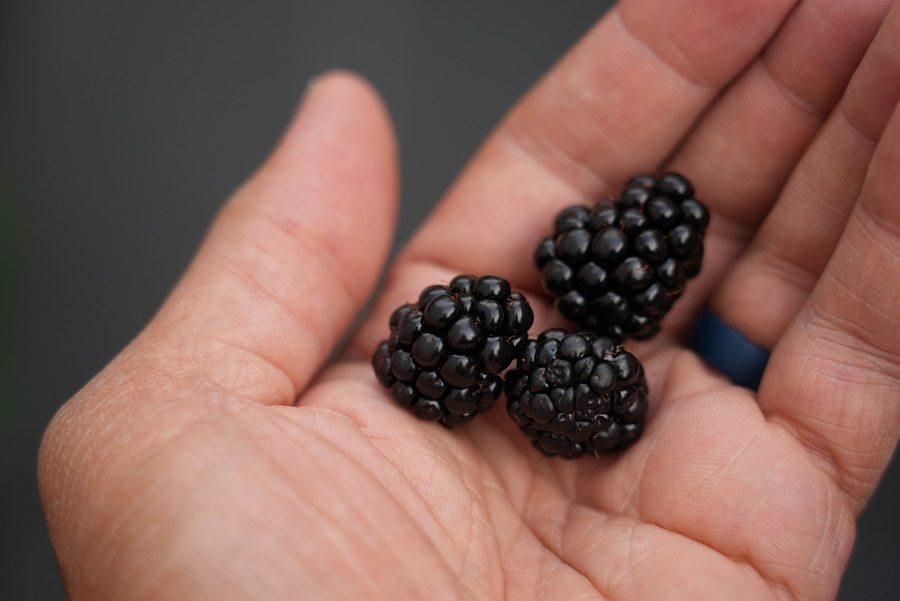
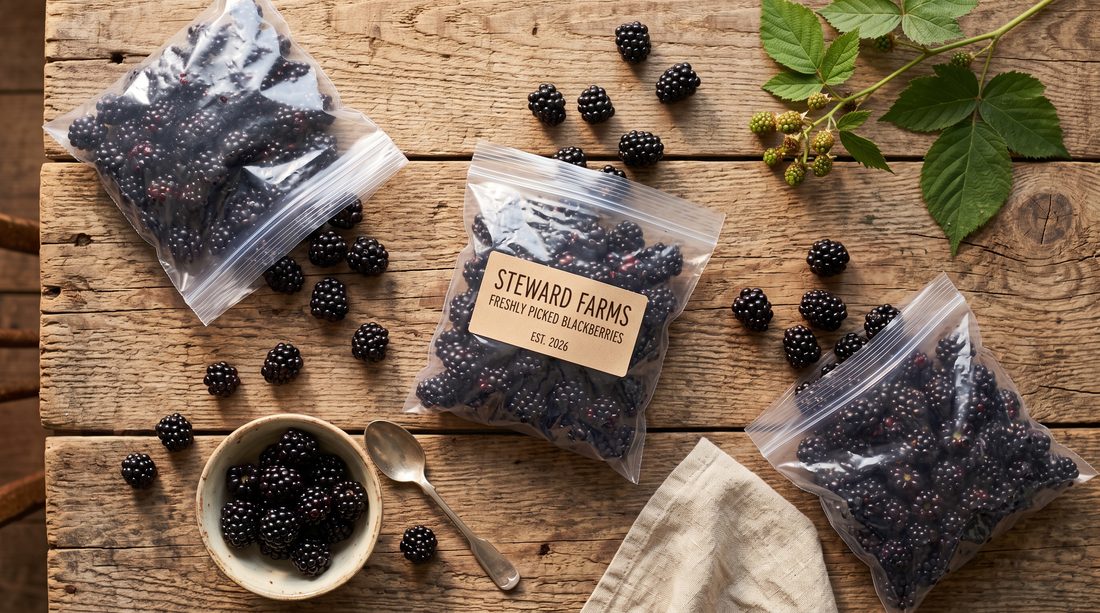
Freshly picked from our canes in Marietta — zero pesticides, maximum nutrition.
Anthocyanins — The Purple Powerhouse
That deep purple-black color you see in a ripe blackberry isn't just for looks. It's anthocyanins — a class of plant compounds that function as some of the most potent antioxidants found in any food.
Here's where blackberries actually outshine blueberries. A study published in Plant Foods for Human Nutrition compared the total antioxidant capacity of blackberries, blueberries, and black currants. The result? Blackberries demonstrated the highest total antioxidant capacity of the three. The reason comes down to a specific anthocyanin called cyanidin-3-O-glucoside, which accounts for 94% of blackberry anthocyanins and is one of the strongest antioxidant compounds found in any of the berries tested.
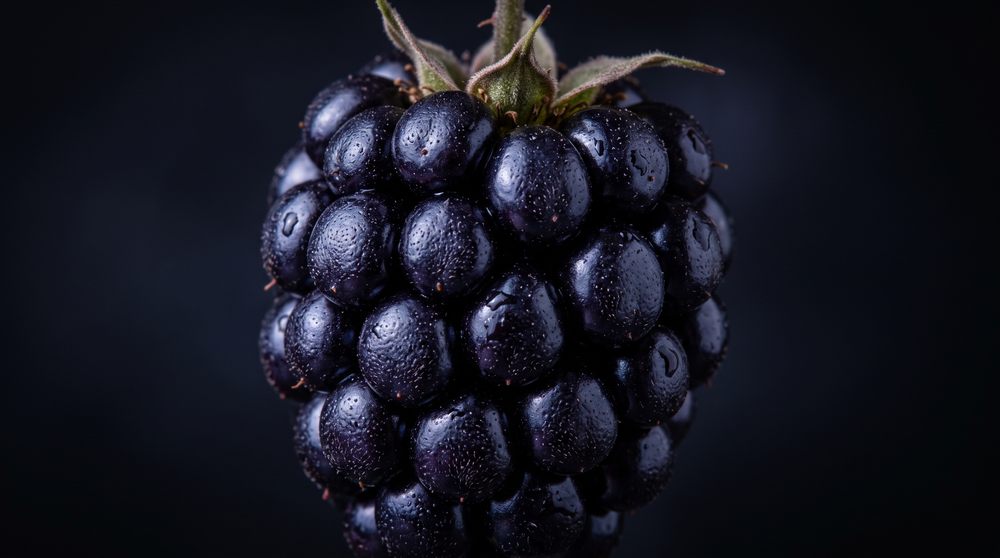
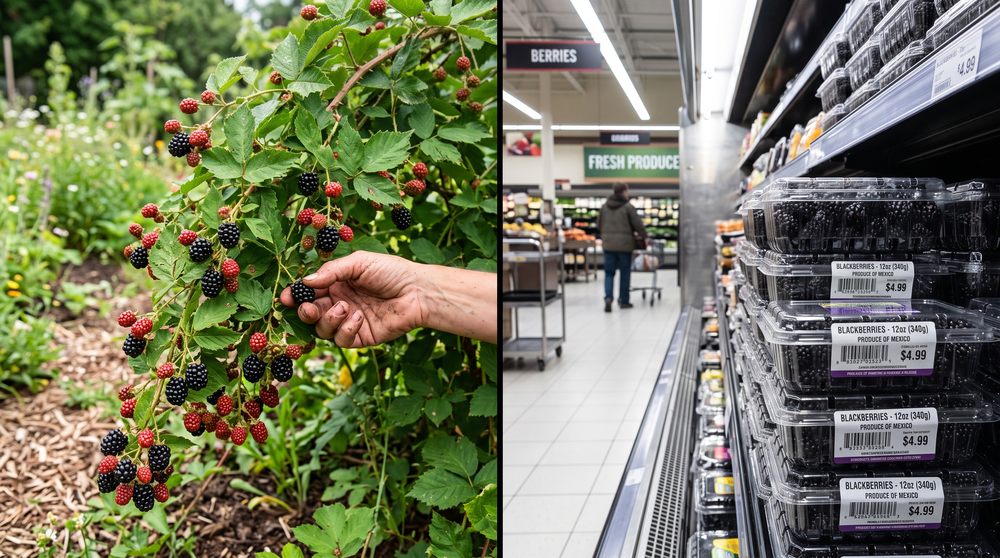
Left: the deep purple-black color is anthocyanins — powerful antioxidants. Right: fresh from the bush vs. the grocery store — there's no comparison.
What do anthocyanins do? Research suggests they help reduce inflammation — the kind that over time contributes to heart disease, type 2 diabetes, and cognitive decline. They support cardiovascular health, brain function, and may even play a role in cancer prevention. As the Cleveland Clinic puts it, a diet rich in antioxidants like anthocyanins can help reduce or ward off inflammation throughout the body.
Developing an Eye for Ripeness
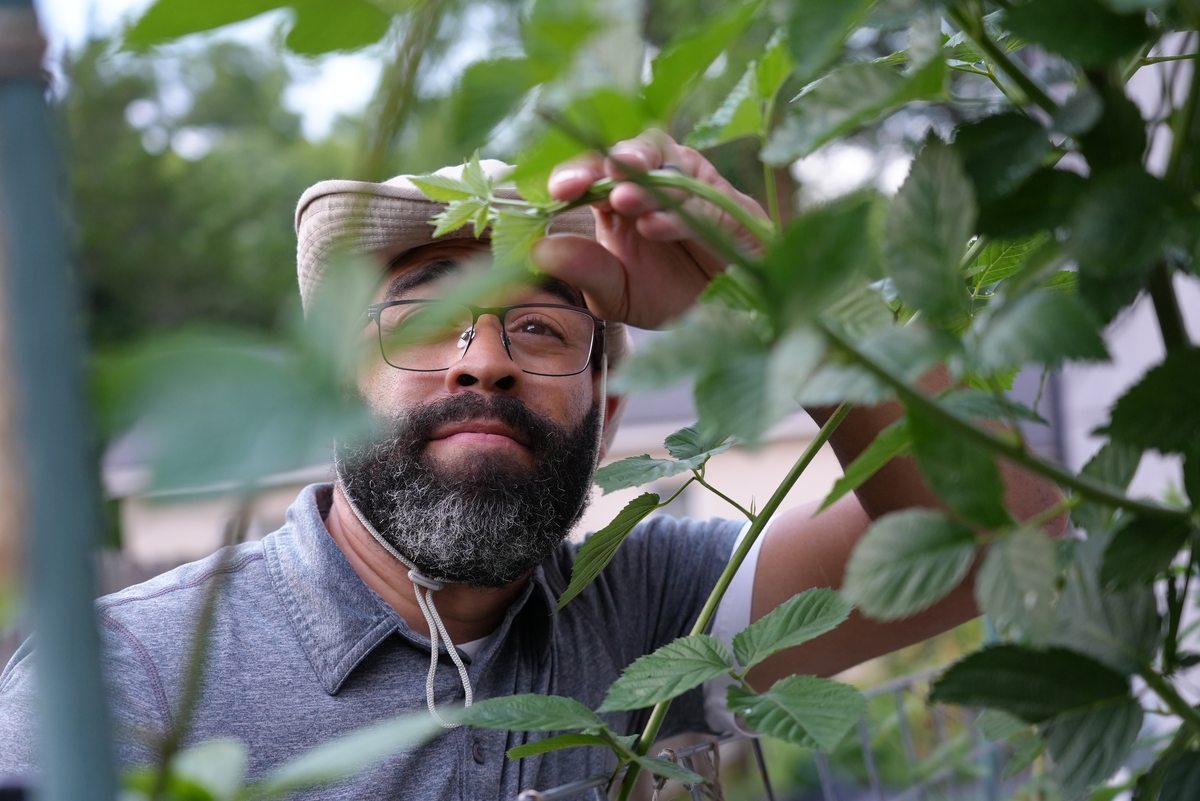
Here's something we're learning at Steward Farms: knowing when to pick a blackberry is a skill, and it takes practice to master.
A lot of people assume that once a blackberry turns black, it's ready. Not quite. A truly ripe blackberry goes through a subtle transition you have to train your eye to catch. It starts glossy and firm when it first turns black — that's when commercial growers pick them, because they ship better. But the sweetest, most nutritious berry is the one that's gone just past that shine into a soft, dull matte finish. The drupelets look plump and swollen. The berry yields slightly to a gentle squeeze. And when you reach for it, it practically falls into your hand — no tugging, no pulling. If you have to fight the cane for it, it's not ready.
Blackberries don't ripen after picking. This moment on the vine is everything. There are no second chances.
We're developing that eye more and more with every harvest. It's the difference between a berry that's good and one that's exceptional — peak sugar, peak aroma, peak nutrition. It's a skill we take seriously, because the people who buy from us deserve the best berry the plant can produce. Learn more about what drives blackberry sweetness.
Pesticide-Free Matters — Especially for Blackberries
Important: Blackberries are now on EWG's Dirty Dozen list. When the USDA tested conventionally grown blackberries for the first time in 2023, they found pesticide residue on 91% of samples. A total of 58 different pesticides were detected, with an average of more than four pesticides per berry sample. The most commonly detected was cypermethrin — classified by the EPA as a possible human carcinogen — found on nearly half of all conventional samples.
Let that sink in. You're eating one of the healthiest fruits on the planet, loaded with antioxidants and vitamins designed to protect your body — and if it's conventionally grown, there's a strong chance it's also carrying chemicals linked to cancer.
That's why we grow pesticide-free at Steward Farms. Not because it's a marketing angle. Because it doesn't make sense to eat a superfood covered in poison. The whole point of a blackberry is what God put in it — not what industrial agriculture puts on it.
God Designed This
Every compound we just talked about — the fiber, the vitamin C, the anthocyanins, the manganese, the low glycemic response — none of it was discovered by accident. None of it evolved through blind chance. Every single one of these compounds was designed by a Creator who built the medicine into the meal before we ever knew we needed it.
"And God said, 'Behold, I have given you every plant yielding seed that is on the face of all the earth, and every tree with seed in its fruit. You shall have them for food.'"
Genesis 1:29God didn't just give us food to survive. He gave us food that heals, protects, and nourishes at the cellular level. Antioxidants that fight inflammation before you ever feel it. Fiber that keeps your body running the way it was designed to run. Vitamins that strengthen your immune system and your bones. All packed into a tiny berry that also happens to taste incredible.
"Their fruit will be for food, and their leaves for healing."
Ezekiel 47:12The idea that plants provide both nourishment and healing isn't a modern wellness trend — it's a biblical principle as old as creation itself. The same God who designed your body designed the blackberry. The same hand that formed the cells in your immune system formed the anthocyanins that support it. That's not coincidence. That's intentional, generous, brilliant design from a Creator who cares about your health down to the molecular level.
How to Get the Most Out of Your Blackberries
Eat them fresh and ripe. Vitamin C is heat-sensitive and water-soluble, so raw is best. The riper the berry (dull matte black), the higher the sugar-to-acid ratio and the more developed the aromatic compounds.
Freezing preserves most of the good stuff. If you can't eat them all fresh, freeze them. Anthocyanins hold up well through freezing, so you're not losing the antioxidant power. Spread them in a single layer on a baking sheet, freeze for a few hours, then transfer to a bag.
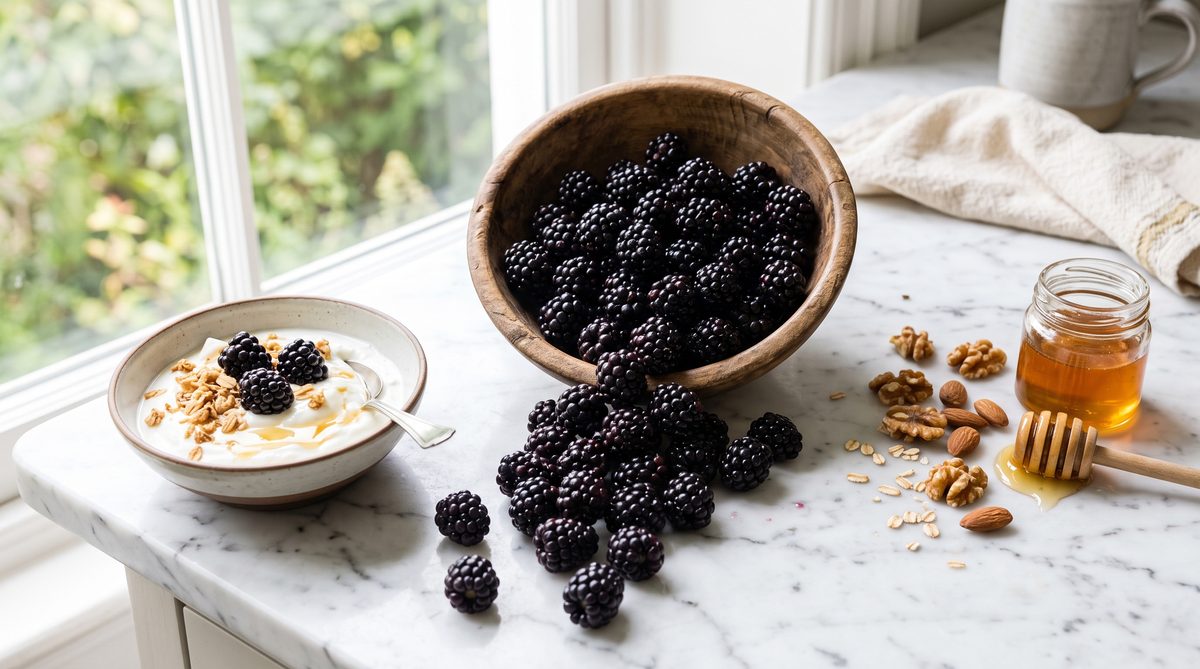
Pair them with healthy fats. Some beneficial compounds in blackberries — like vitamin E and certain antioxidants — are fat-soluble, meaning your body absorbs them better with fat. Greek yogurt, nuts, or a drizzle of olive oil in a berry salad all work.
Don't wash until you're ready to eat. Moisture promotes mold and blackberries are delicate. Store them dry, unwashed, in a shallow container in the fridge.
"Oh, taste and see that the Lord is good!"
Psalm 34:8Steward Farms is a pesticide-free blackberry micro-farm in Marietta, Georgia. We're sold out for 2026 — follow us on Facebook for updates on next season and tissue culture plant sales this winter.
Sources
- Virginia Tech Cooperative Extension — "Blackberry Fruit: Nutrition Facts and Health Benefits" (SPES-366). Nutrition data sourced from USDA Agricultural Research Service.
- Healthline — "6 Benefits of Blackberries for Health and Nutrition." Overview of vitamin C, vitamin K, manganese, fiber, glycemic index (25), and glycemic load (4).
- Cleveland Clinic — "8 Reasons Why Blackberries Are Good for You." Registered dietitian Julia Zumpano, RD, LD on anthocyanins, fiber, and anti-inflammatory benefits.
- Chun et al. (2015) — "Contribution of Anthocyanin Composition to Total Antioxidant Capacity of Berries." Plant Foods for Human Nutrition. Blackberry demonstrated highest total antioxidant capacity vs. blueberry and black currant; cyanidin-3-O-glucoside accounted for 94% of blackberry anthocyanins.
- Environmental Working Group (EWG) — 2026 Shopper's Guide to Pesticides in Produce: Blackberries. USDA found pesticide residue on 91% of 885 non-organic blackberry samples; 58 pesticides detected; cypermethrin found on nearly half of samples.
- NC Cooperative Extension — "Nutritional Value of Blackberries." USDA-sourced nutrition facts and health benefit overview.