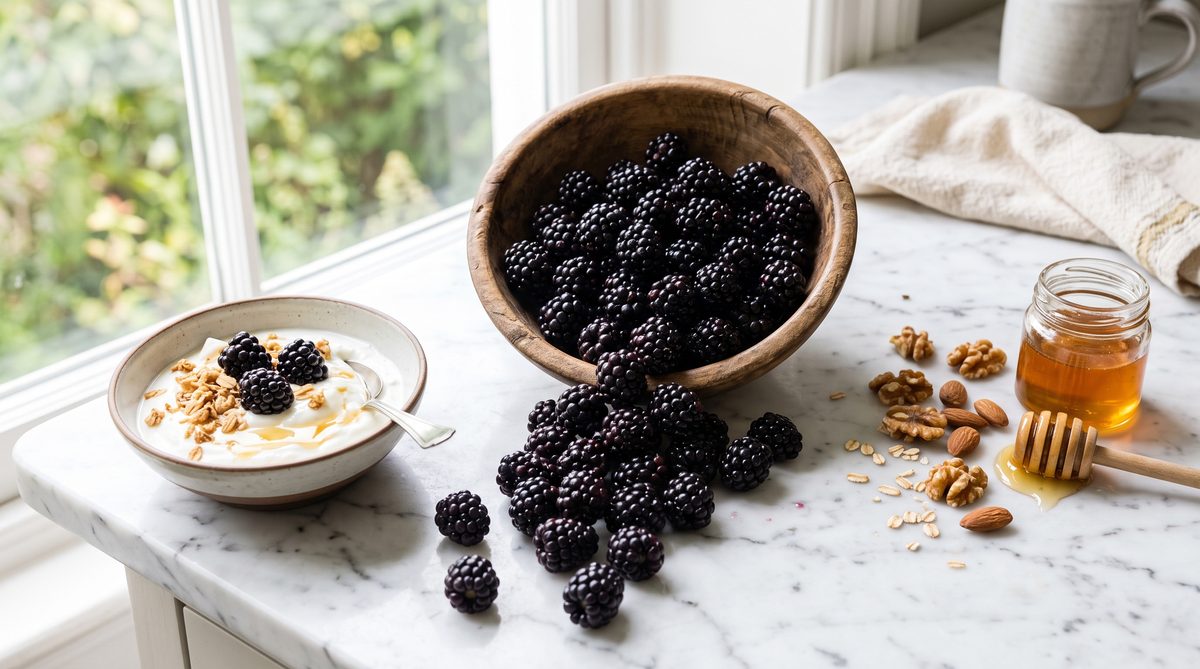
You bite into a sun-warmed blackberry straight off the vine. That burst of sweetness hits your tongue and something in you just knows — this is good. This is right. This is the way food is supposed to taste.
Most of us stop there. We enjoy the berry and move on. But if you slow down and ask why that blackberry is sweet — really ask — the answer will take you somewhere you didn't expect. Not just into chemistry, but all the way back to a Garden, a Creator, and a world that looked very different from the one we live in now.
More Than Sugar
When we say a blackberry is sweet, we tend to think it's just about sugar content. But the reality is far more elegant than that.
Blackberry sweetness is a carefully balanced ratio of sugars (fructose and glucose) to organic acids (mainly citric and malic acid). Growers measure this with something called Brix — a reading of soluble sugar concentration. But Brix alone doesn't tell the whole story. A berry with high sugar and high acid will taste tart. The sweetness you love comes when the acid drops and the sugar rises in perfect proportion.
Then there's the part most people never consider: aroma. Blackberries contain dozens of volatile aromatic compounds that your nose detects while you chew. Your brain combines smell and taste into a single experience. Sweetness, it turns out, is as much about fragrance as it is about sugar.
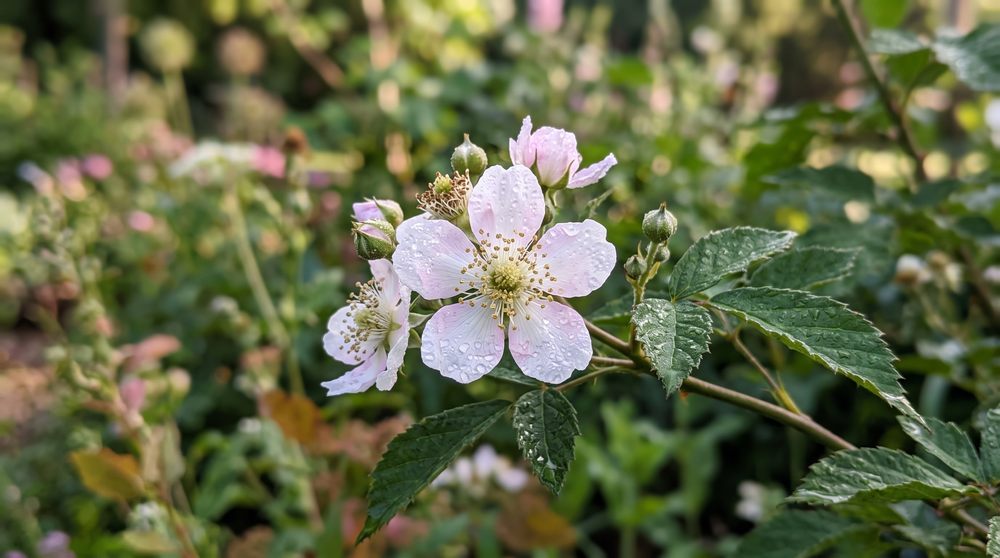
Blackberry flowers in full bloom — the first step in a months-long ripening journey.
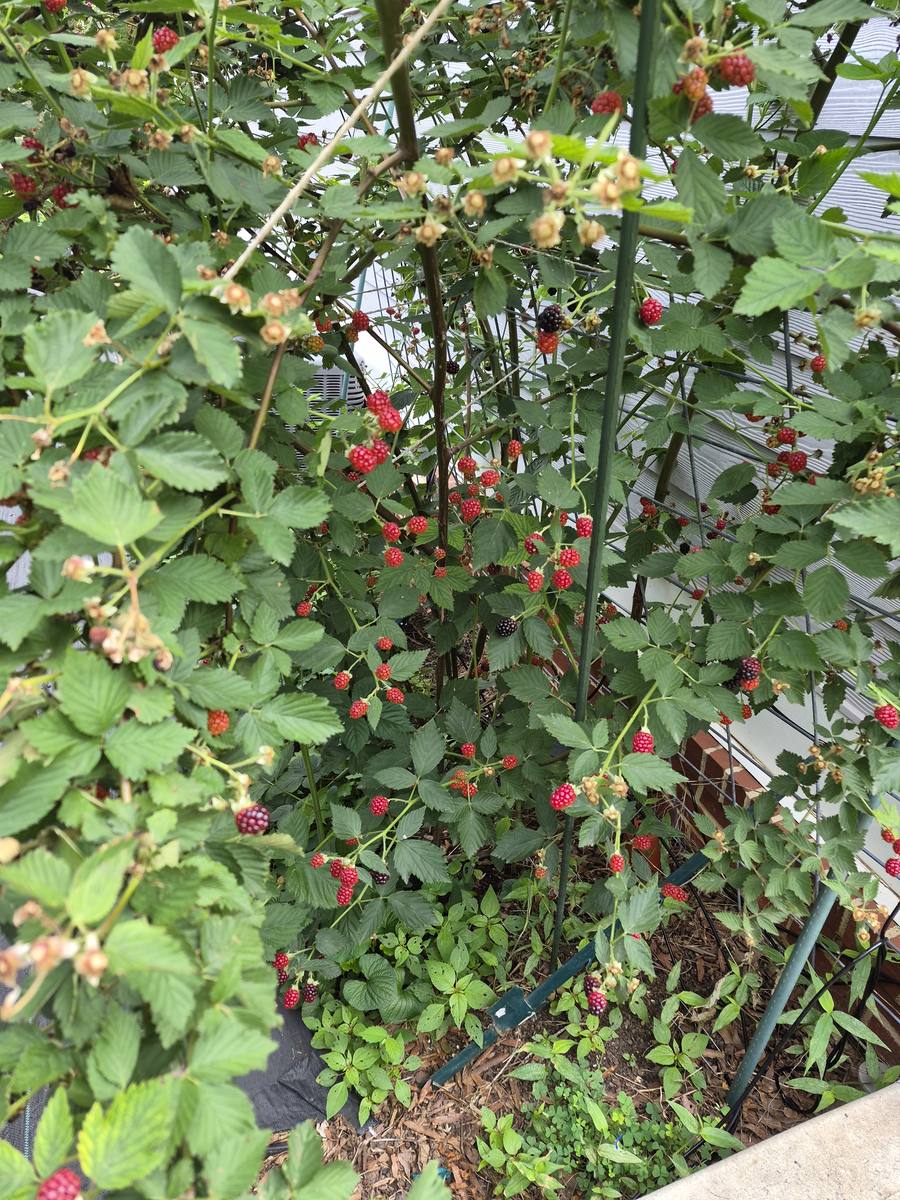
And the timing? The plant doesn't release all of this at once. There's a carefully orchestrated ripening sequence — chlorophyll breaks down, anthocyanins build up (that's the deep purple-black color), acids decrease, sugars concentrate, and aromatics develop. The berry signals to you with its color that it's ready. Not a day too early. Not a day too late.
That's not randomness producing a happy accident. That's design.
A Lock and a Key, Spoken Into Existence Together
Here's something worth sitting with: your tongue has a specific receptor for sweetness called T1R2/T1R3. It's a protein pair that fits sweet molecules the way a lock fits a key. The compounds in a ripe blackberry match that receptor with remarkable precision.
Now ask yourself — which came first? The sweet fruit, or the tongue that could taste it?
"And God said, 'Behold, I have given you every plant yielding seed that is on the face of all the earth, and every tree with seed in its fruit. You shall have them for food.'"
Genesis 1:29God made the fruit. God made the tongue. God made the aromatic compounds, and the nose to smell them, and the brain to weave it all together into the experience of sweetness. He designed both sides of the equation and spoke them into existence in the same week.
Sweetness wasn't an evolutionary accident that happened to make certain calories more attractive. It was a gift — deliberately crafted by a Creator who wanted His image-bearers to not just survive on the food He gave them, but to delight in it.
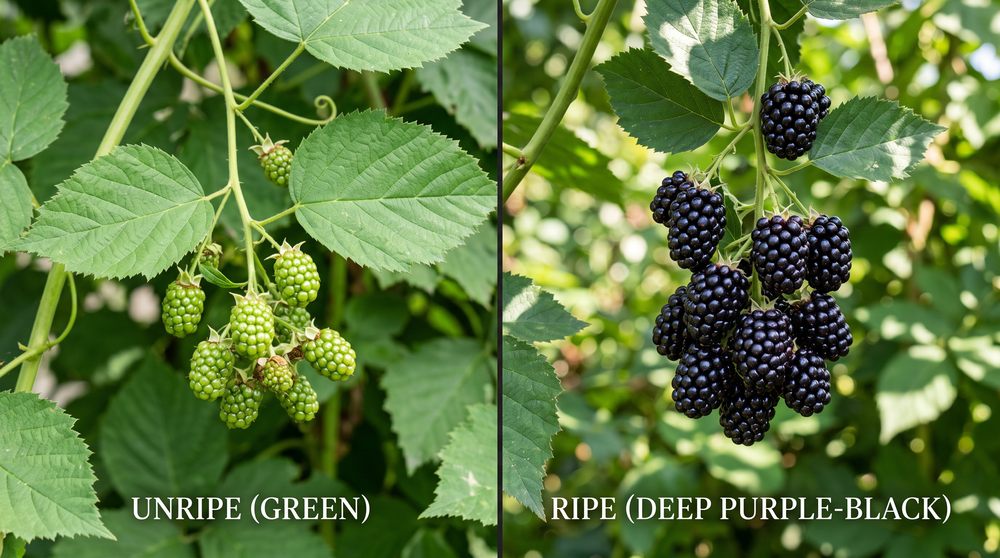
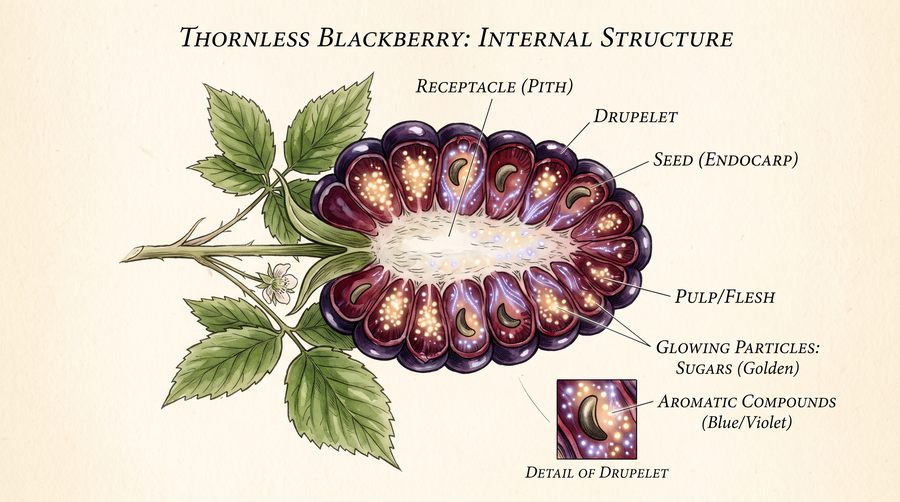
Left: the full ripening arc from green to red to black. Right: inside a ripe blackberry — each drupelet is its own tiny fruit.
A World Before Meat
This is where the blackberry takes us somewhere most people don't expect.
Go back to Genesis 1. Read verses 29 and 30 carefully:
"And God said, 'Behold, I have given you every plant yielding seed that is on the face of all the earth, and every tree with seed in its fruit. You shall have them for food. And to every beast of the earth and to every bird of the heavens and to everything that creeps on the earth, everything that has the breath of life, I have given every green plant for food.' And it was so."
Genesis 1:29–30Every plant. Every fruit. For all living creatures. In the original creation — the world God called "very good" — there was no death. No predation. No animal killed another animal for food. Man and beast alike ate from the abundance of what grew from the ground.
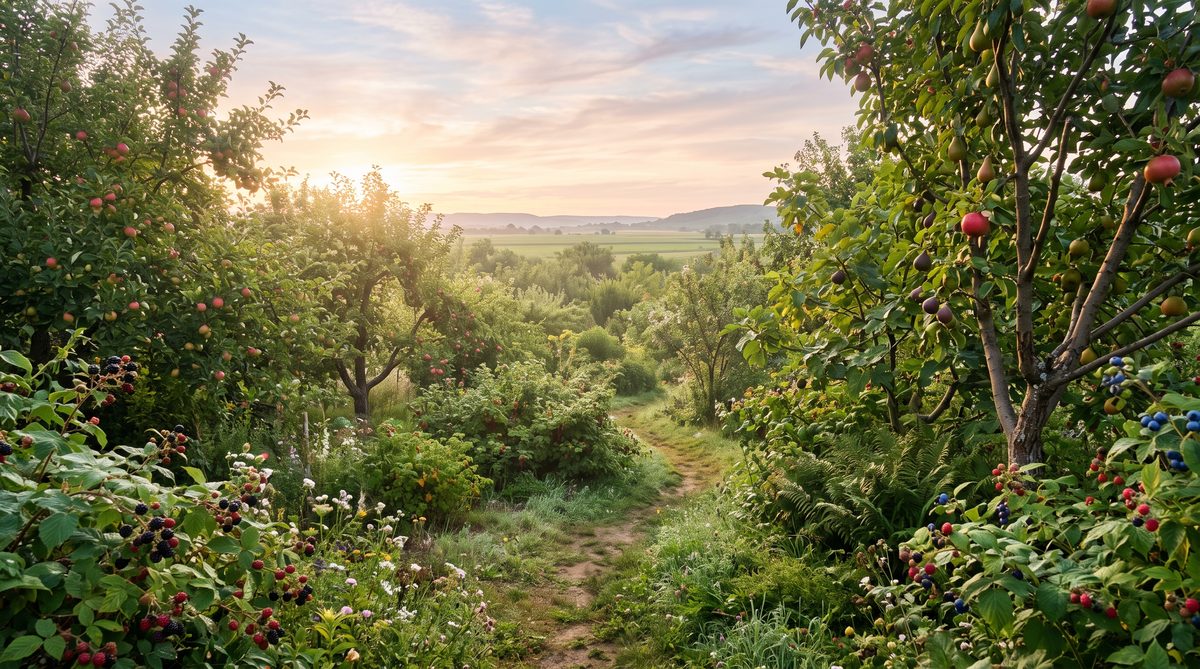
Think about what that means for the blackberry. In that world, fruit wasn't a snack or a side dish. It was the meal. The sweetness, the nutrition, the satisfaction — God designed it all to be enough. Fruit was created to fully nourish, fully sustain, and fully satisfy the people and creatures He had made.
The blackberry you enjoy today is an echo of that original design. Every compound, every vitamin, every burst of flavor carries the fingerprint of a Creator who built a world where plants were the provision and death had no place at the table.
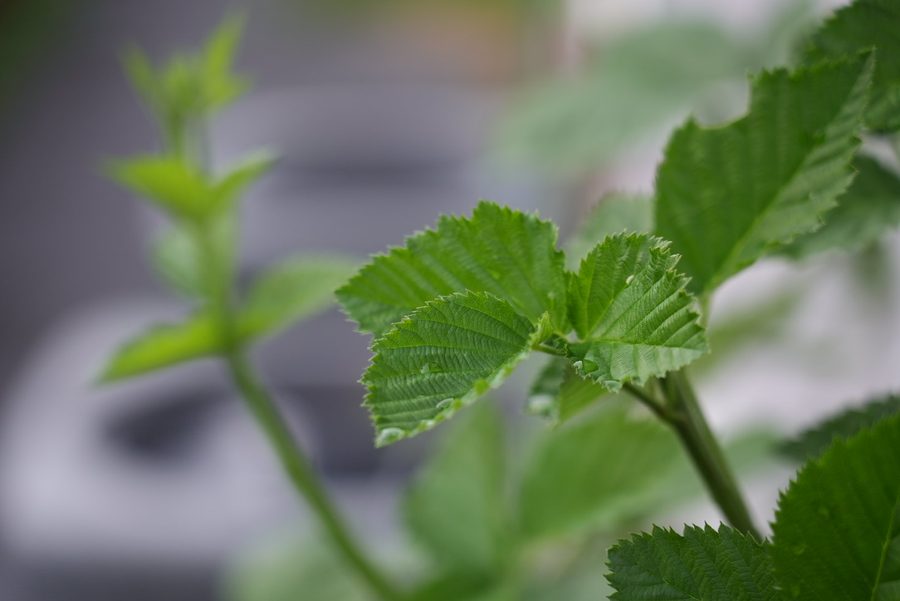
New growth on our blackberry plants — the same God-designed system at work year after year.
What Changed
Then came the Fall. Sin entered the world, and death followed. And after generations of increasing wickedness, God judged the earth with a global Flood. When Noah and his family stepped off the ark into a radically changed world, God expanded the provision:
"Every moving thing that lives shall be food for you. And as I gave you the green plants, I give you everything."
Genesis 9:3Meat was now permitted. Not because the original design was flawed, but because the world itself had changed. God, in His mercy, adapted His provision to meet humanity in a broken, post-Flood reality.
But here's what's beautiful: He never took away the fruit.
The blackberry still grows. It still ripens on the vine with that same God-designed system — sugars rising, acids falling, aromatics blooming, color deepening. Thousands of years after Eden, thousands of years after the Flood, the berry still does exactly what it was made to do. It still delights. It still nourishes. It still points back to a Creator who gives good gifts.
Sweetness Is Theology You Can Taste
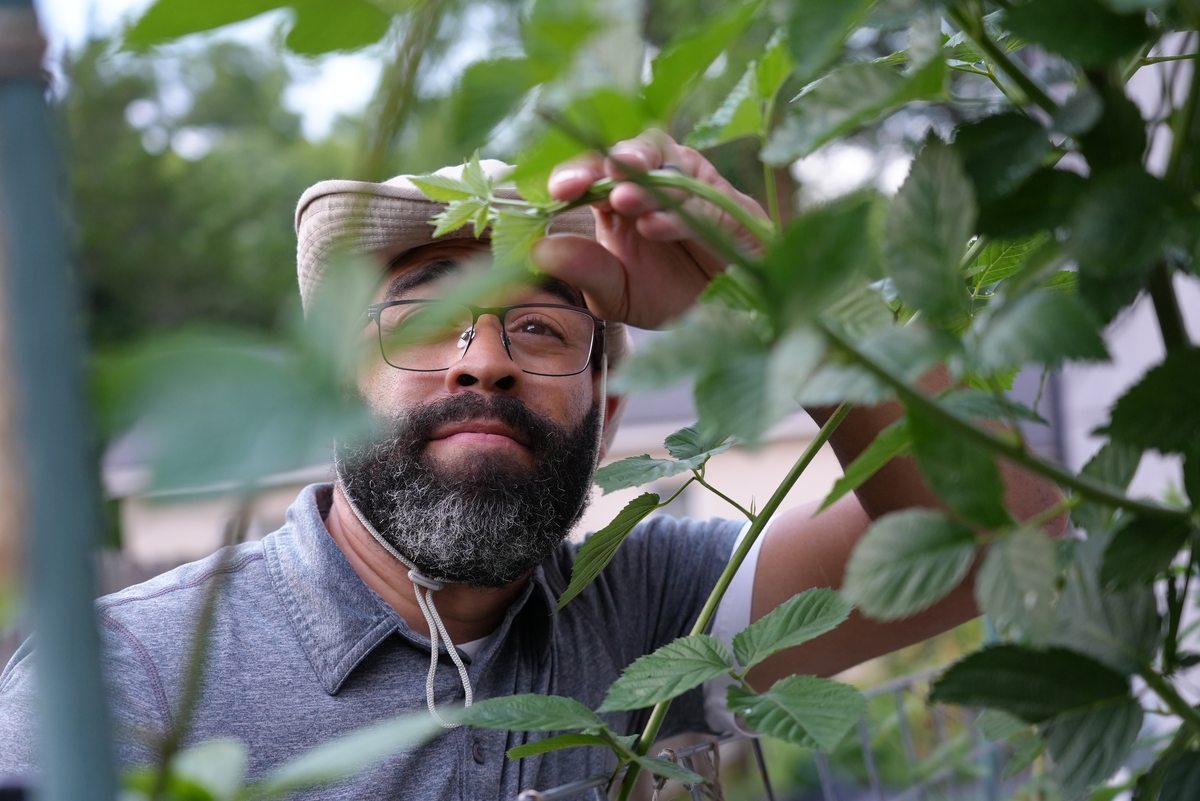
At Steward Farms, we grow our blackberries without pesticides — not because it's trendy, but because we believe in stewarding what God has made. The name isn't an accident. We're stewards of this land, these plants, and the fruit they produce.
When we hand you a pint of our blackberries, we're handing you something that connects you to the very first chapter of the Bible. The sweetness on your tongue was designed before the foundation of the world by a God who didn't have to make food taste good — but did, because He is generous, and creative, and good.
So the next time you bite into a blackberry, don't just taste the sugar. Taste the design. Taste the intention. Taste the kindness of a Creator who made your tongue and the fruit at the same time, and made them for each other.
"Oh, taste and see that the Lord is good!"
Psalm 34:8Steward Farms is a pesticide-free blackberry micro-farm in Marietta, Georgia. We're sold out for 2026 — follow us on Facebook for updates on next season and tissue culture plant sales this winter.