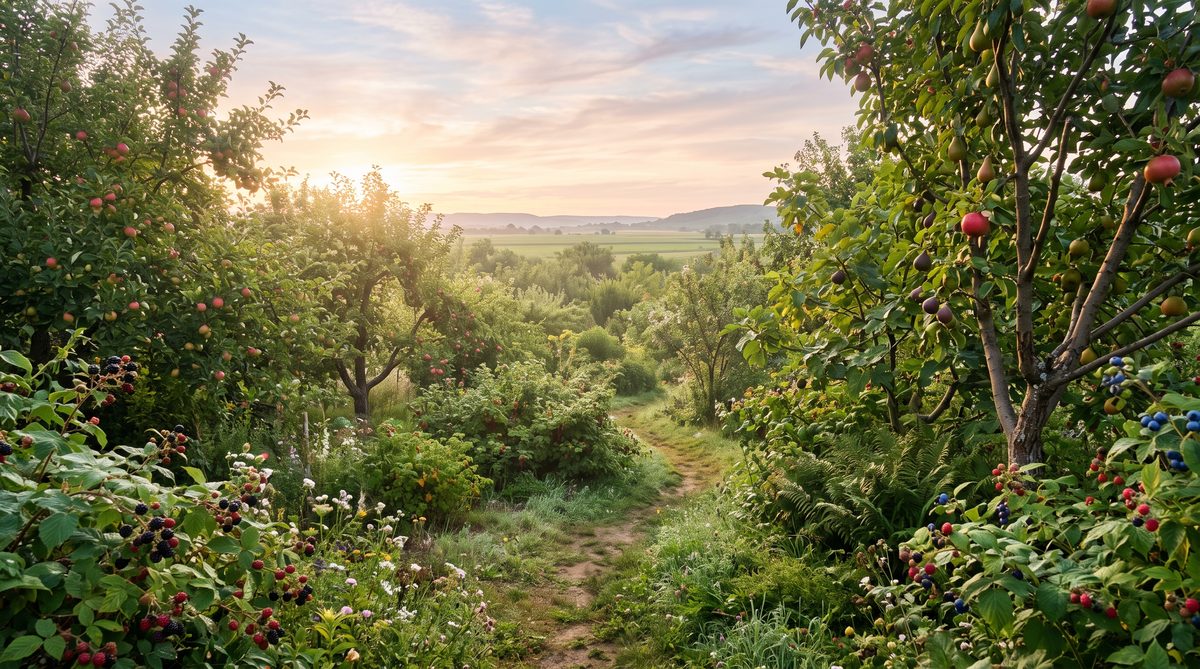
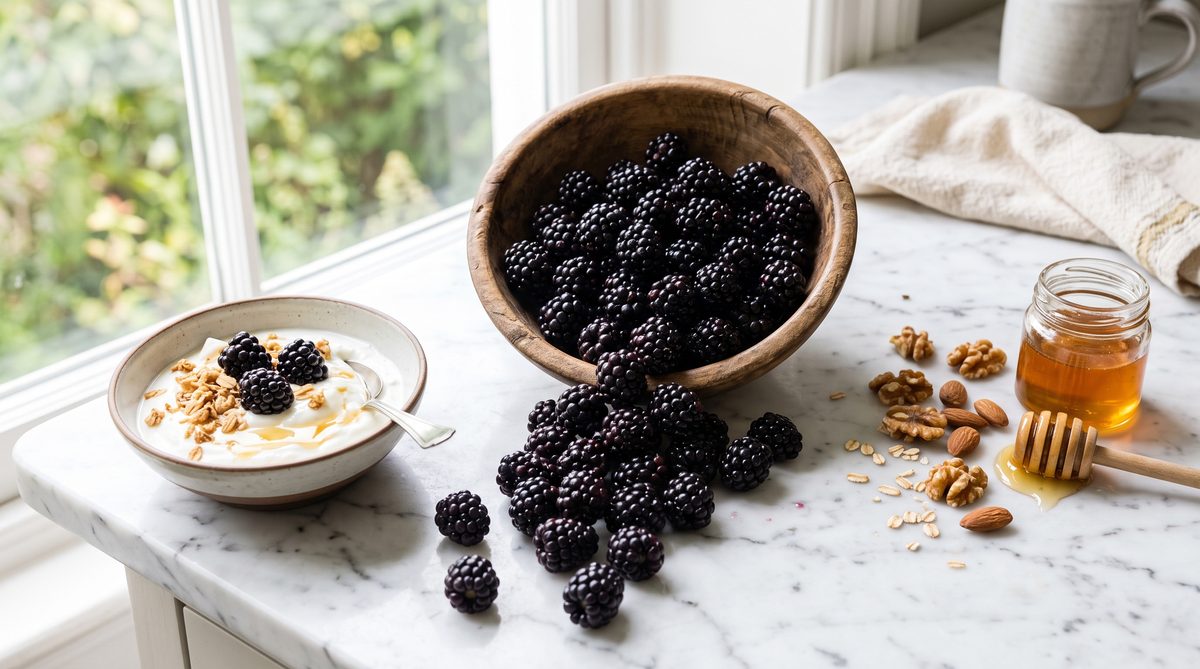
This whole thing started because my son Josiah loves blackberries.
That's it. No business plan. No spreadsheet. No five-year projections. Just a dad watching his son enjoy blackberries — along with plenty of other fruits and veggies — and thinking, "I bet I could grow these myself and save some coins."
So I planted some canes at our property here in Marietta, Georgia. Pesticide-free from day one — if my family is going to eat them, I want to know exactly what's on them and what's not. I gave them good soil, good water, and some patience. And they produced. They produced well.
That first little harvest was everything I hoped it would be. Fresh blackberries for the family, no trip to the store, no markup, no mystery chemicals. Mission accomplished. Or so I thought.
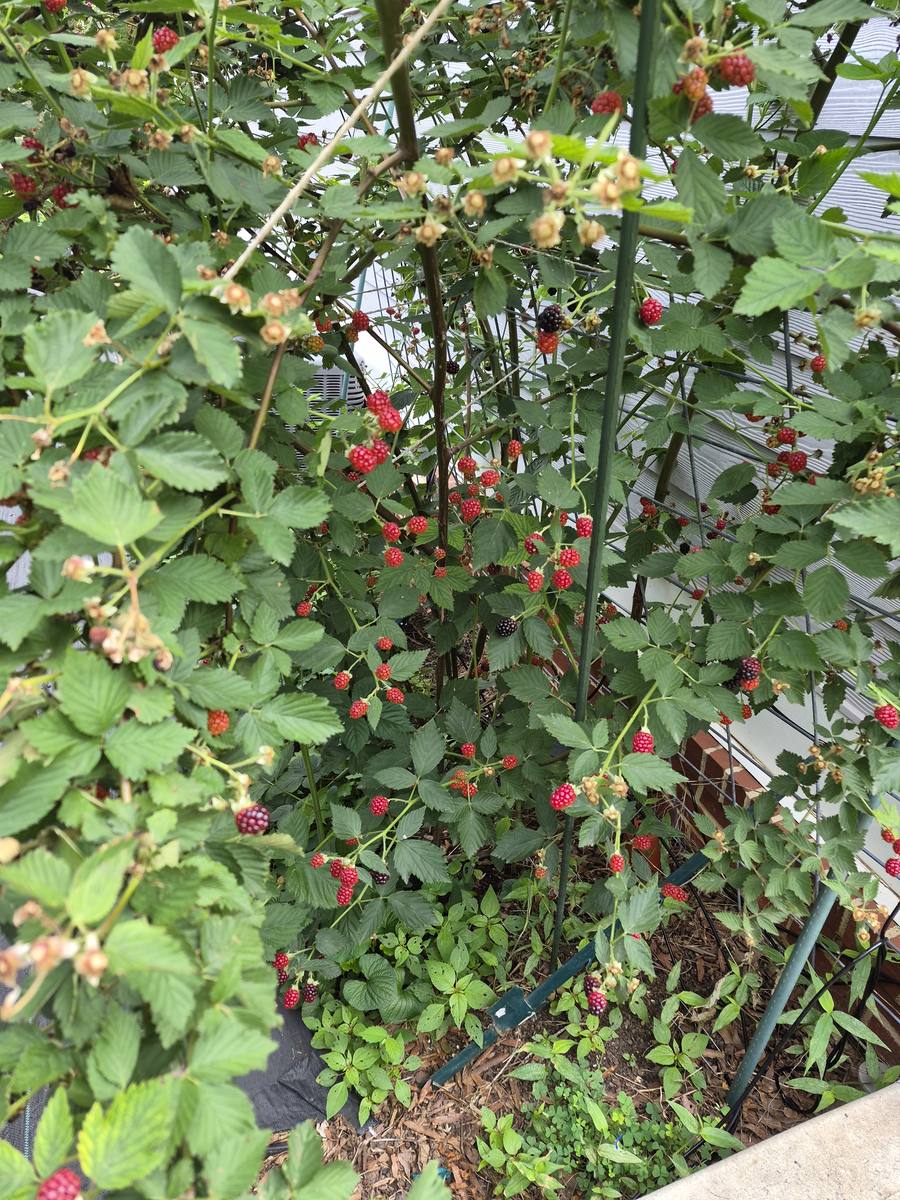
Our blackberry canes in Marietta — loaded with berries at every stage of ripening.
The Surprise
The next season came around and the canes came back stronger. We still had frozen berries from last year, and when I told Gen the new ones were about to be ready, she was still figuring out what to do with the frozen batch. Then she said something that changed the trajectory of everything: "Why don't you sell them?"
I didn't overthink it. I just went for it. Listed them online — pesticide-free blackberries, $7 a pint or two for $12, grown right here in Marietta.
The response caught me off guard. They sold out. Not slowly — they moved fast. Thirty-one pints across eight customers, and every single one of them came back wanting more. People weren't just buying berries. They were looking for something real — local food, grown by someone they could talk to, with nothing on it they couldn't pronounce.
I went into it hoping to save some coins. I ended up making some.
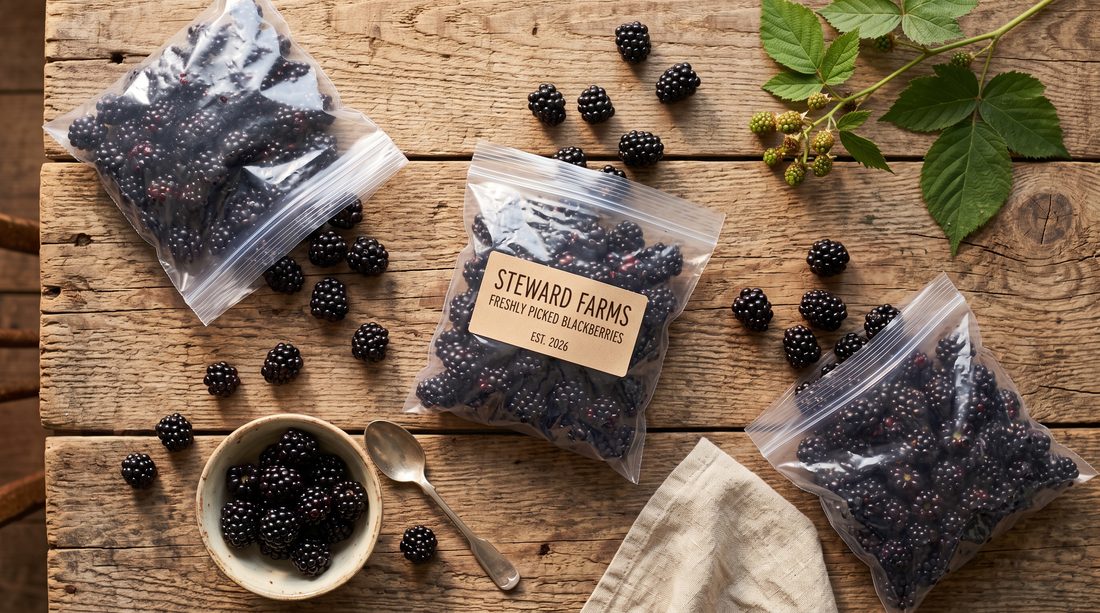
Steward Farms blackberries — freshly picked, packaged, and sold out in 2026.
The People
What surprised me almost as much as the demand was the people. Selling blackberries turned into something I didn't expect — genuine connection.
Casey stopped by to grab some berries, and his wife made a beautiful dessert with them, took a photo, and posted it to social media. That was totally cool. They came back for more, and she even came by to see the micro-farm in person. That moment right there — someone enjoying what you grew so much that they want to see where it came from — that's when I realized this was bigger than berries.
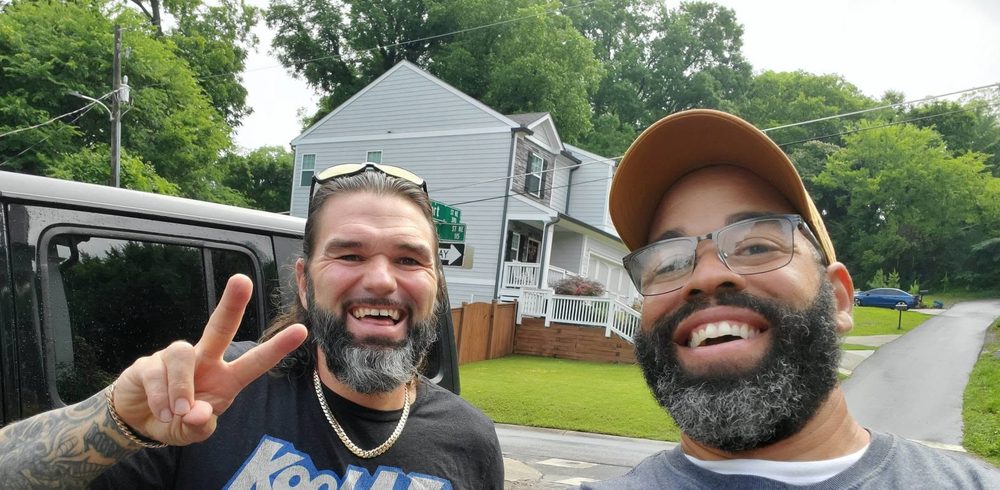
Casey picking up his order — Marietta, GA
Trevor was another one. He kept coming back. The kind of customer who becomes a regular before you even have regulars — reaching out each time he needed more, consistent and loyal. When someone does that, it tells you something. It tells you the product is right and the mission is real.
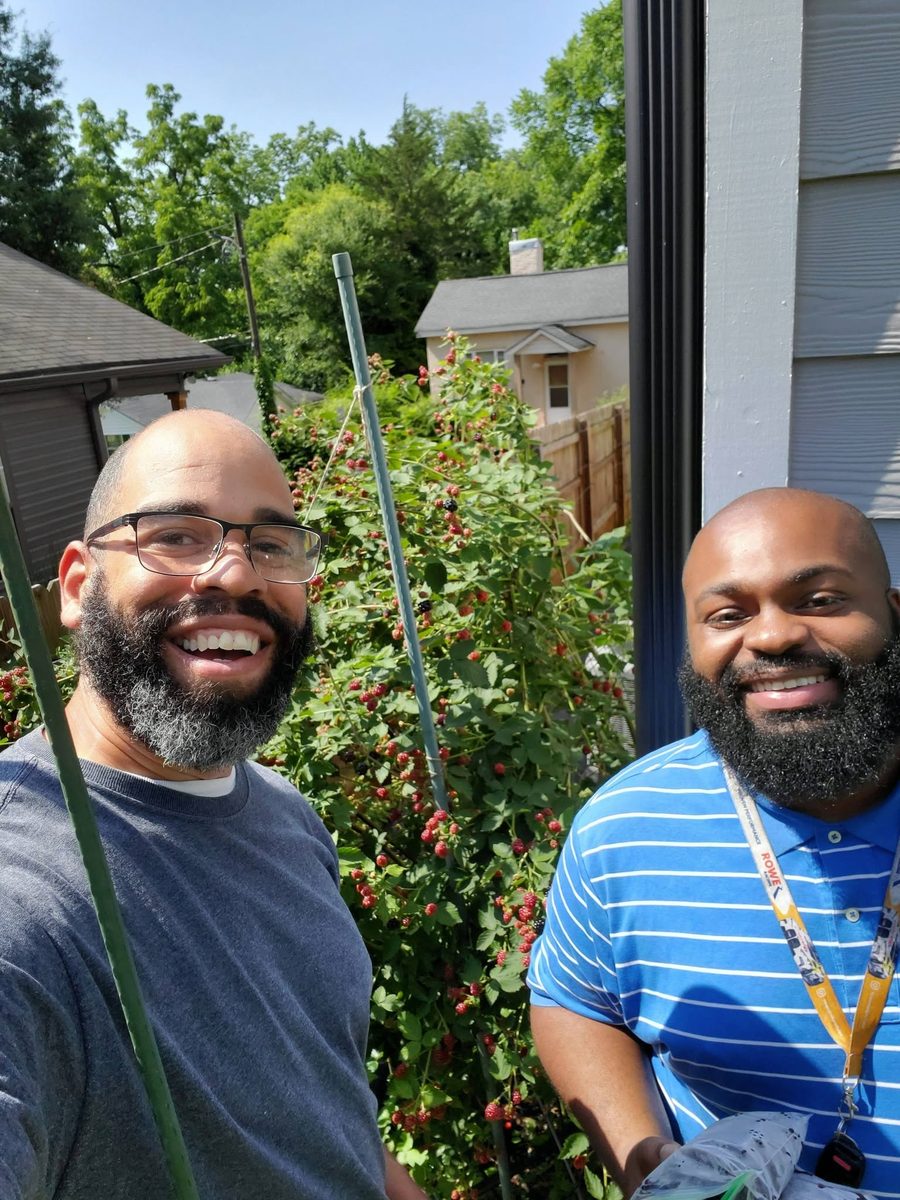
Trevor at the canes — Steward Farms, Marietta, GA
Micro-farming isn't just agriculture. It's community. There's something about handing someone food you grew yourself that builds trust in a way nothing else does. You're not a brand. You're not a store. You're their neighbor, and the berries are still warm from the sun.
Wisdom I Didn't Manufacture
Here's what I need to be honest about: none of this was my cleverness.
Every step of this journey — the decision to plant, Gen's idea to sell, the overwhelming response, the vision for what comes next — I can trace each one back to wisdom I didn't generate on my own. These weren't ideas I sat down and strategized. They were gifts, dropped into my life at the right time by a God who gives generously.
"If any of you lacks wisdom, let him ask God, who gives generously to all without reproach, and it will be given him."
James 1:5I asked. He gave. It's that simple and that profound. The idea to plant blackberries for my son. The nudge from my wife to sell the surplus. The vision for scaling up. I can't take credit for any of it.
"Trust in the Lord with all your heart, and do not lean on your own understanding. In all your ways acknowledge him, and he will make straight your paths."
Proverbs 3:5–6Why Am I Working for My Land When It Should Be Working for Me?
This is the question that changed everything.
Every year property taxes go up. Food prices go up. Gas, insurance, utilities — everything climbs. And meanwhile, most of us have land sitting right there doing nothing. We mow it. We water it. We pay taxes on it. We work to maintain it. But it gives us nothing in return.
That hit me one day and I couldn't shake it. I'm working for my land. But God designed land to work for us. That's the whole principle of agriculture — you put something in the ground and it multiplies.
Here's what makes blackberries different from most things you could plant: with proper care, a blackberry crown — the perennial root system that sends up new canes each year — will keep producing fruit for fifteen to twenty years. That's not a crop you replant every season. That's infrastructure. That's a system that keeps giving back year after year, long after the initial investment of time and labor.
"Prepare your work outside; get everything ready for yourself in the field, and after that build your house."
Proverbs 24:27Get the field right first. Let the land produce. Then build from there. That's exactly what we're doing.
Scaling Up — Tissue Culture
Once I saw the demand — sold out for the entire 2026 season — one thing became very clear: I need more plants. A lot more.
I found tissue culture on YouTube — and honestly, at first it looked intimidating. Sterile lab environment, laminar flow hoods, nutrient media, contamination risks. It's the science of cloning plants: you take a tiny cutting from your best-performing plant, place it in a nutrient medium under controlled conditions, and it multiplies. One plant becomes ten. Ten becomes a hundred. And every single one is genetically identical to your strongest, sweetest producer.
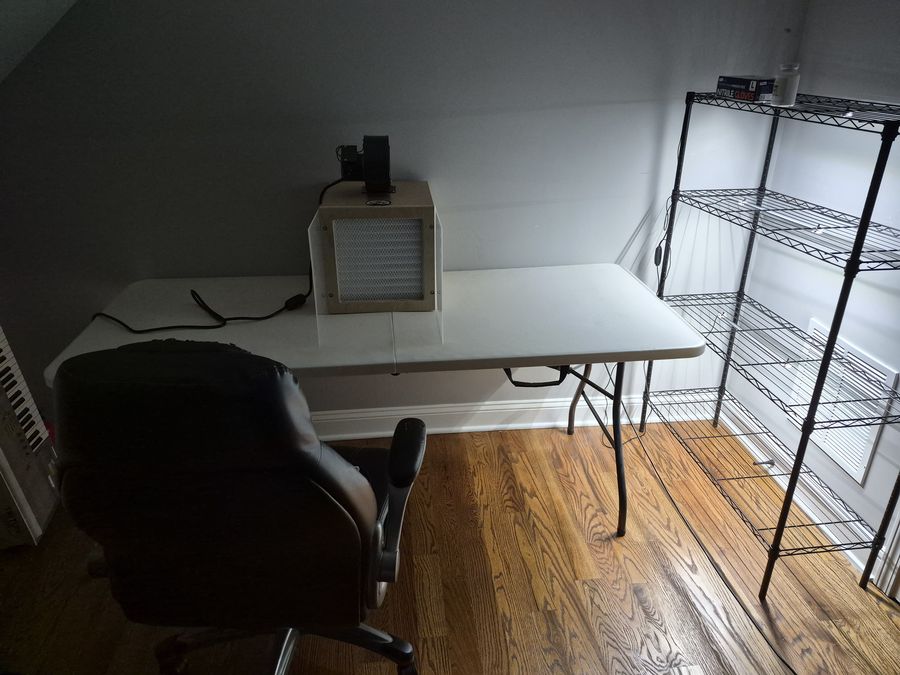
The home tissue culture lab — laminar flow hood, sterile media, and the tools to multiply our best genetics.
But here's the thing — I build websites for a living. I've been coding for years. And if there's one thing coding teaches you, it's that patience wins and getting emotional doesn't fix anything. Broken code doesn't care about your frustration. You troubleshoot, you learn, you try again. I'll bring that same mindset to the lab.
The goal isn't just more berries next season. It's a system that compounds — more plants, more fruit, more revenue, more capacity, every single year. And I'd love to eventually offer tissue culture plants for sale so other growers can start with the same clean, disease-free genetics we're building here in Marietta.
The Generational Vision
But this was never just about berries. Not really.
I homeschool Josiah. That means I'm always thinking about ways to work from home, generate extra income, and — just as importantly — teach him about entrepreneurship as early as possible. I want him equipped to make a real impact in his community and for his family long before most people even start thinking about that.
Steward Farms is part of that education. When I look at it, I see something Josiah can inherit. Not just a property, but a property that pays for itself. A piece of land lined with canes that produce year after year, generating enough revenue that property taxes aren't a burden on the next generation.
"A good man leaves an inheritance to his children's children."
Proverbs 13:22An inheritance isn't just money in a bank account. It's a system. It's knowledge passed down. It's land that's been cared for and built up so the next generation doesn't start from zero — they start from abundance.
Thanks Be to Christ
Everything about Steward Farms — the name, the mission, the way we grow — is rooted in thanksgiving to Jesus Christ. He gave me a son who loves blackberries. He gave me a wife who saw what I wasn't even thinking about. He gave me land in Marietta to steward. He gave me the wisdom to act when the ideas came.
"And whatever you do, in word or deed, do everything in the name of the Lord Jesus, giving thanks to God the Father through him."
Colossians 3:17I enjoy connecting with God through gardening. Hands in the dirt, sun on your back, watching something grow that you planted. And it's no coincidence that Scripture is filled with the language of farming — sowing and reaping, cultivating, pruning, bearing fruit. God chose agricultural language to teach us about faith, patience, and His provision because working the land puts you in the right posture before Him.
I didn't build this. I'm stewarding what He provided. That's why it's called Steward Farms. Not because it sounds nice — because it's true. Every pint of berries, every new plant in the lab, every conversation with a neighbor picking up their order — it's all worship. It's all His.
Steward Farms is a pesticide-free blackberry micro-farm in Marietta, Georgia. We're sold out for 2026, but tissue culture plant sales are coming this winter. Follow us on Facebook for updates.
Steward C.
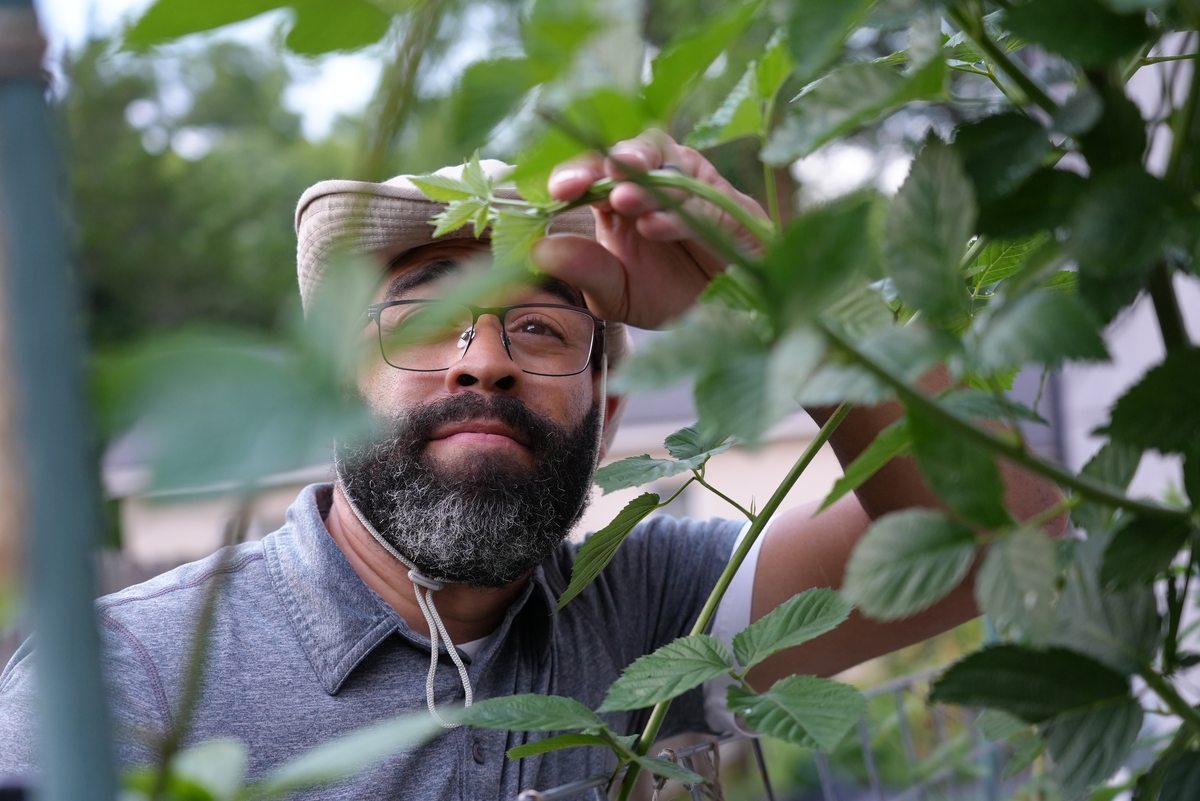
Founder of Steward Farms in Marietta, Georgia. Growing pesticide-free blackberries for his family, his community, and eventually his son Josiah's future. Web developer by day, farmer by calling.