The harvest starts before the first berry leaves the cane. A clean container, room in the refrigerator, and a decision about what to eat or freeze can protect the work that went into growing the fruit. Without that plan, a good picking session can end with a deep bowl of crushed berries waiting on a warm counter.
At Steward Farms, Ouachita connects two parts of our work: growing fruit for people to enjoy and growing plants for people who want a harvest of their own. Both lead to the same practical question. Once the berries are ripe, what happens next?
The answer is a sequence rather than a secret: recognize fruit ready for its intended use, handle it gently, keep it cool, and choose a sensible destination. A blackberry picked for immediate eating does not face the same journey as a berry packed for a distant market. This guide concentrates on a home harvest and the household decisions that follow it. The University of Georgia’s harvesting and postharvest guide explains why careful handling and cooling matter.
Put the container beside the plant first
Choose a container that allows the fruit to rest without a heavy pile pressing down on the bottom berries. Several small containers can be easier to manage than one large bucket. The right container is the one that fits the fruit and the distance it needs to travel, not the one that creates the biggest-looking harvest photograph.
Set it somewhere stable before picking. A container held awkwardly while the other hand reaches through canes can spill, tilt, or invite fruit to be dropped from too far above. If the row is long, plan a place to set down filled containers instead of carrying them through the whole planting.
Think about the route back to the kitchen too. Clear a shelf, find a tray, and decide which fruit will be eaten first. These are small preparations, but each removes a delay after picking. Handling decisions made beside an empty bowl are usually easier than decisions made beside a full one.
Read the berry, not just the calendar
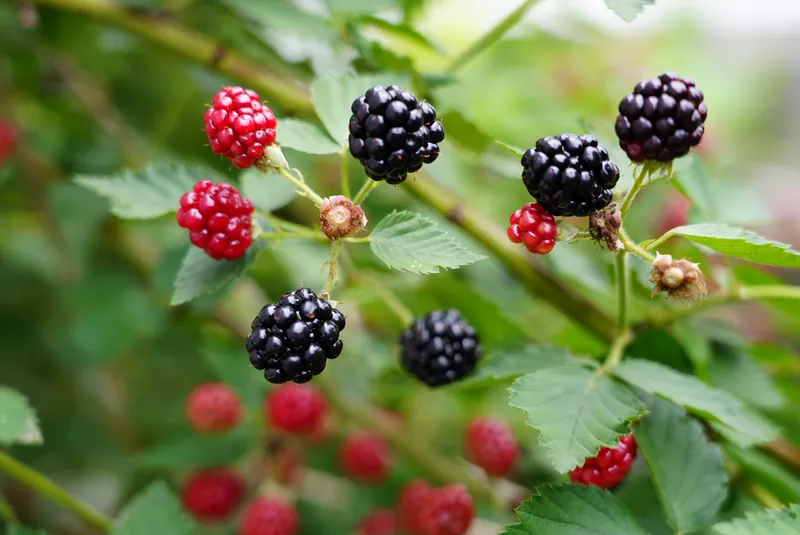
Look at individual fruit rather than assuming the whole cluster is ready. A blackberry planting can carry different stages at once. The photograph of red and black fruit from our MyTCLab image library makes that visible: one cane can offer several different picking decisions.
UGA’s home-garden guide discusses maturity indicators for erect blackberries. Combine the appearance of the fruit with how it releases and what you learn from tasting sound, properly handled berries from your own planting. A calendar date is a reminder to inspect the row, not a substitute for looking at it.
Ouachita’s harvest timing also depends on place and season. Arkansas observations describe Arkansas conditions; they are not a guaranteed picking date for Marietta, a coastal garden, or a colder inland site. Record when your own first usable berries appear. Over several seasons, that record becomes more valuable than a date copied from a nursery listing.
Give each berry a short, gentle journey
Let the fruit reach the container without unnecessary squeezing, tossing, or repacking. If you need to inspect it, do so with enough care that the inspection does not become the damage. Sound fruit and fruit with visible problems should not be mixed simply to make the container look full.
Keep the picking container out of direct heat while working. The longer the harvest sits beside the row, the more important that holding spot becomes. A shaded place and an orderly collection routine support the next step: moving the berries into appropriate cold storage rather than leaving the whole harvest warm while other jobs compete for attention.
Commercial handling instructions may include equipment, humidity targets, and operating procedures that a home kitchen does not have. Do not pretend the household refrigerator is a professional cooling room. Use the underlying lesson—gentle handling and prompt cooling—while following household food-handling guidance for the actual equipment available.
Divide the harvest while the decision is easy
A useful plan has three questions. How much fruit is here? How much will be eaten fresh? Where will the rest go? The planner below turns the first two answers into a freezer allocation.
Try it as you read
Plan where your harvest goes
The numbers are volumes for organizing food, not a forecast of plant yield. If eight cups are on the tray and three cups are assigned to fresh meals, five cups remain for another use. The tool will flag an allocation larger than the harvest instead of silently producing a negative freezer portion.
Do not let the arithmetic override the fruit’s condition. The plan begins with berries suitable for the intended use. Freezing does not repair spoiled fruit, and calling a container “for cooking” does not make every damaged berry acceptable. Inspect before assigning portions so the totals describe food you can actually use.
Keep storage and washing decisions separate
Washing before eating and preparing berries for freezing are different moments in the routine. They should not be collapsed into a rule borrowed from another fruit. Virginia Tech’s blackberry handling guidance provides a household reference for selection and preparation.
For fruit being held fresh, pay attention to moisture, condition, and cold storage. Before eating, follow the recommended washing procedure. For freezing, follow the preparation in the blackberry-specific preservation source rather than assuming instructions about blueberry skins apply to blackberries too.
It helps to decide the destination first. That prevents a household from washing all the fruit out of habit, leaving part of it sitting wet, and then trying to solve the storage question later. Arrange the steps so each prepared portion has somewhere to go.
Freeze berries in portions you will recognize
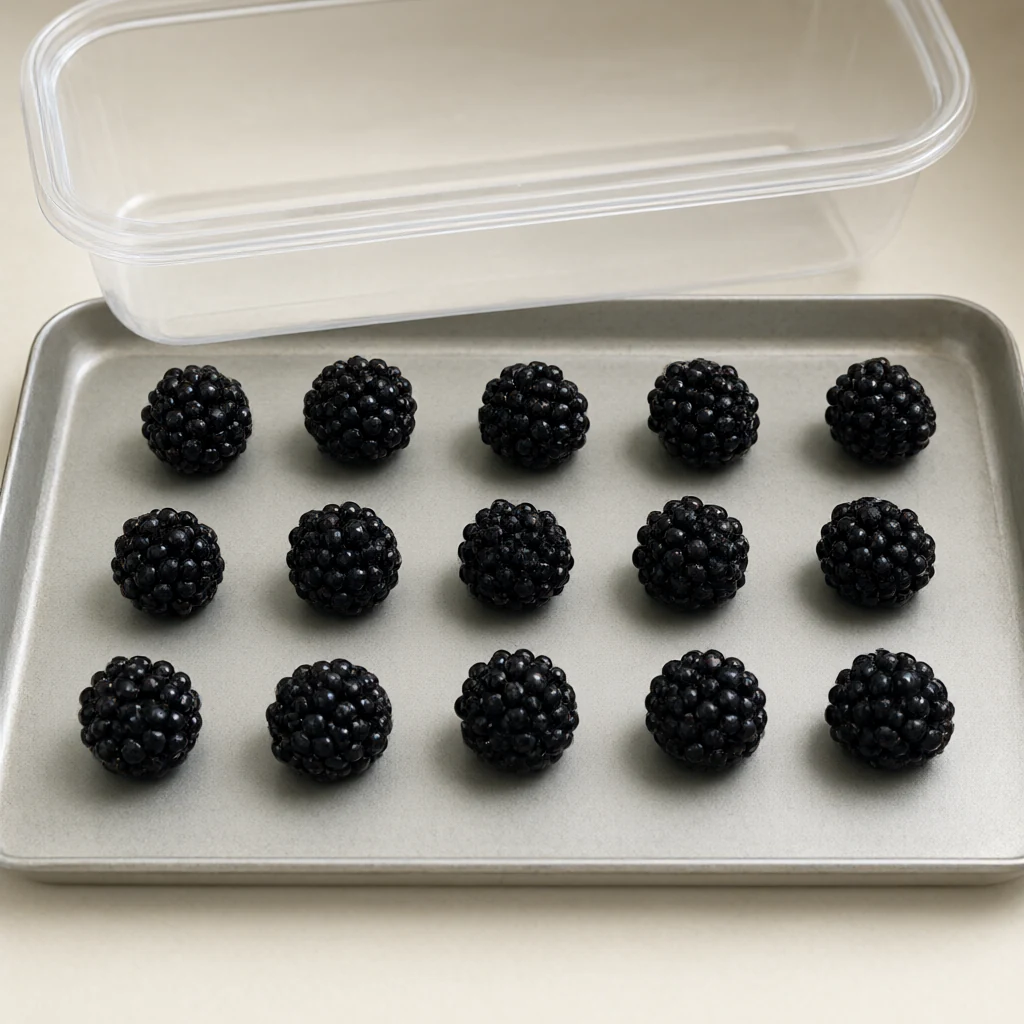
The National Center for Home Food Preservation, hosted by UGA, gives specific directions for blackberries and dewberries. It includes selecting suitable ripe fruit, washing carefully, and using appropriate packs. A tray method can help keep berries separate before packing them into freezer containers.
Choose a portion size by thinking ahead to the meal. A small household may prefer several modest containers; a larger baking project may call for a different amount. The important point is that the package should make the future job easier. A frozen block that must be partly thawed to remove one breakfast serving may not fit the way the household eats.
Label the package while its contents are obvious. Include the fruit and packing date. If an ingredient has been added, record it so the next recipe does not begin with a guess. Keep the preparation instructions with the plan rather than relying on a memory of what happened during a busy harvest afternoon.
Expect thawed fruit to have its own uses
The freezer preserves an opportunity to use the crop, not the exact experience of picking a berry and eating it immediately. Choose later dishes that welcome the fruit’s changed texture: a warm oat bowl, a fruit sauce, a baking mixture, or a blended preparation.
Our blackberry fiber and meal guide suggests everyday uses without treating each one as a nutritionally tested recipe. A spoonful added to breakfast can be as useful as a more ambitious weekend dessert. The best freezer plan is the one that returns fruit to meals instead of moving it permanently out of sight.
The University of Maine bulletin developed by nutrition specialist Nellie Hedstrom and revised by Louise O. Kirkland also connects a summer berry harvest with later freezer use. Tufts’ berry guidance points readers toward uses that welcome thawed fruit, such as yogurt and oats. Those ideas make preservation part of everyday meals rather than an end in itself.
Keep freezer inventory visible. An original household habit might be to place new containers behind older ones and note the portions on a small list. That list is an organizing device, not a replacement for storage-temperature guidance or an assurance that every package remains in ideal condition indefinitely.
A doctor’s practical case for a berry freezer stash
In the published transcript of NutritionFacts.org’s Best Berries video, physician Michael Greger, MD, FACLM, says:
“I encourage everyone to eat berries every day, to always have bags of frozen berries in their freezer.”
His discussion includes blackberries specifically, alongside several other berries. The everyday usefulness of that advice fits a home harvest: freezing manageable portions gives the fruit a place in meals after picking season ends. His discussion compares laboratory antioxidant measurements, which do not establish that a particular berry delivers better health outcomes in people. The quote concerns berries generally and does not evaluate Ouachita or Steward Farms. Use UGA’s blackberry-specific preparation instructions above for the actual freezing method.
Separate freezing fruit from chilling plants
Two jobs in blackberry growing use cold, and their names can cause confusion. Refrigerating or freezing harvested berries is about keeping or preserving fruit. Winter chilling concerns the living plant’s seasonal development before a later crop.
Ouachita’s estimated winter-chill requirement does not describe how long its harvested berries should stay in a freezer. Nor does the existence of commercial cold-room plant production mean young nursery plants should be stored beside frozen food. Our planting and climate guide explains those distinctions and includes the variety chart and location map.
Keeping these subjects separate helps readers ask the right question. Is the goal to protect this week’s harvest, prepare a dormant crop for production, or help a newly purchased plant settle into the garden? Each needs its own instructions, equipment context, and plant or fruit stage.
Receive the harvest with thanks
Before a harvest becomes a freezer inventory, it gives us a reason to thank Jesus, the Creator we acknowledge in Colossians 1:15–17. We can study storage and handling while remembering that the living crop is a gift entrusted to our care.
After the Flood, Genesis 8:22 speaks of seedtime and harvest, cold and heat, summer and winter. That passage gives our farm a language of gratitude for seasons; it is not a storage timetable for berries. Using sound fruit well and avoiding needless waste are practical ways to receive a harvest with that gratitude.
Let the harvest teach you what to plant next
Write down what the household used, not just what the row produced. Did the fresh fruit disappear at breakfast? Did freezer portions return to meals? Was one planned recipe too involved for the available time? These observations can improve next season’s harvest routine and the decision about how many plants to tend.
They can also reveal that the planting already produces enough. More canes mean more care and more fruit to handle. A small row matched to the household’s needs can be more satisfying than a larger planting that turns harvest into a repeated scramble.
If you are still choosing a variety, read our Ouachita overview. If the broader growing conditions are unfamiliar, our Georgia growing guide offers the farm’s regional context. Readers elsewhere should adapt that context to local guidance.
Steward Farms plans to sell fruit and plants as separate offerings. Fresh-fruit availability belongs to the season and the actual harvest; plant shipping does not imply fruit shipping. Whether a berry comes from your garden or a local purchase, give it a destination before the container fills. A good harvest plan ends with food being enjoyed.
A reader question
Does freezing make damaged fruit safe?
The plan starts with sound fruit. Freezing is not a way to repair spoiled berries.