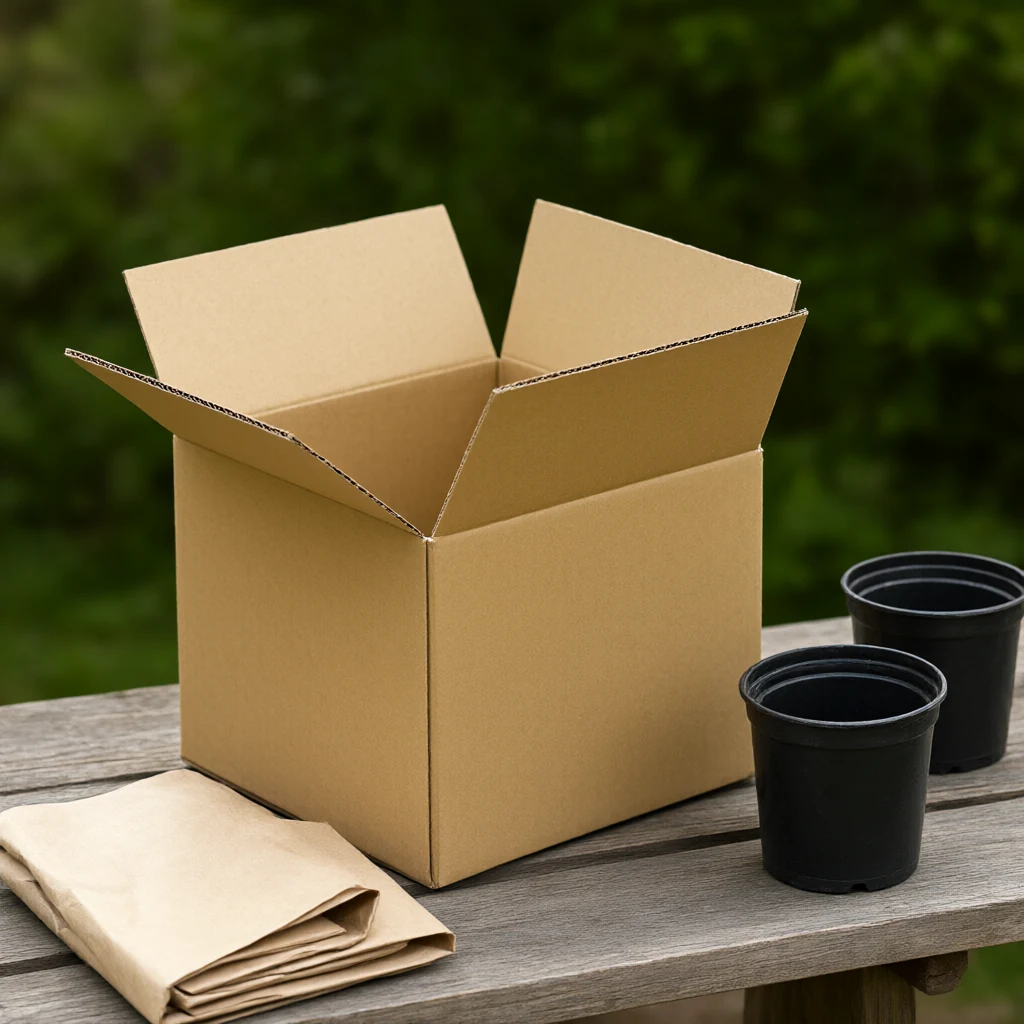
The package arriving at the door is the beginning of a receiving routine, not an instruction to dig a hole immediately. A young blackberry has just moved through a different environment, and the next decision should depend on what arrived, what the grower says, and what conditions wait outside.
Begin with a prepared place to open the box, a way to read the instructions, and enough time to inspect the plants. That modest preparation can prevent a rushed sequence in which a green plug goes from packaging into full sun before anyone has checked its stage or root-ball condition.
This guide concerns rooted nursery blackberry plants, including appropriate tissue-culture-derived plugs. It is not a protocol for plant material just removed from a culture jar. Steward Farms plans to ship Ouachita plants; the final listing and batch instructions will describe the actual product offered. The illustration in this article is a generated receiving scene, not proof of our shipping method, packaging performance, or plant size.
Prepare the receiving space before the delivery
Choose a place where the plants can be inspected without immediately exposing them to the strongest outdoor conditions. Have their paperwork or order description available. Clear enough room that pots or plugs can stand securely instead of balancing on packing material while the rest of the box is opened.
Think through the time after inspection as well. If the garden is not ready, where will the plants wait? If frost remains a concern, what protected arrangement matches the grower’s instructions? A receiving plan should answer those questions before the delivery window becomes busy.
This does not require building an elaborate nursery. It requires knowing the plant stage and arranging a suitable next step. The regional establishment guide explains why green plugs need different handling and timing from dormant planting stock.
Open, identify and read before rearranging everything
Check that the label and order description match what was expected. Keep the cultivar identity attached to each plant, especially if a shipment contains more than one kind. A name on a box becomes less useful once several plants have been placed together without their labels.
Read the grower’s immediate-care instructions before making changes. A general article cannot know what growing conditions the plants experienced before packing or what sale stage the seller prepared. Those details should guide the transition rather than be replaced by a routine remembered from a different plant purchase.
Retain the information long enough to refer back to it. A first-week question is easier to resolve when the instructions, plant label, and arrival date can be found. Our tissue-culture buying article describes the stage questions that should already have been considered before shipment.
Record condition before guessing at a remedy
Look at the whole plant and the root ball or container as supplied. Notice anything that appears damaged or inconsistent with the order description. If a concern needs to be raised with the seller, take a clear photograph and report the arrival condition while it is still possible to describe what was seen.
Avoid turning that first inspection into unnecessary disturbance. A photograph of the whole plant, its label, and a closer view of the concern can be more useful than pulling a rooted plug apart to prove it has roots. The aim is to understand and document the condition, not create a new problem during inspection.
If the plant looks stressed, state what happened in observable terms. Drooping leaves, broken material, an unusually dry root ball, or wet packaging describe conditions. They do not by themselves identify a pathogen or establish what will happen next. The seller needs the facts before it can offer relevant guidance.
Use the arrival checklist as a planning tool
The checklist below records which receiving steps have been considered. It is deliberately modest: completing the boxes does not certify that a plant is hardened, healthy, or ready for outside conditions. It keeps attention on the decisions a new owner can make.
Try it as you read
Make your arrival-day checklist
Use any unchecked item to identify the next question. If the nursery stage is unknown, ask about it. If the root-ball condition has not been checked, do that according to the grower’s directions. If the local frost risk is uncertain, check local guidance before moving ahead.
This tool keeps these checks only while the page remains open. For a lasting record, write the observations in your own notes with dates. A real receiving log should follow the plant through changes; it should not become a set of boxes completed once and then treated as evidence that every later decision is settled.
Check moisture where the roots actually are
The root ball may contain nursery material different from the soil that will eventually surround it. Its appearance and water behavior should be considered in that context. A wet garden bed does not necessarily describe the moisture inside a small plug waiting on a bench.
Follow the grower’s instructions for that stage rather than choosing a fixed daily volume of water from a generic article. Plant size, container material, recent exposure, and weather affect the situation. Watering by habit can hide the very observation that would explain what the plant needs.
A useful note includes what was checked and what action followed. It does not need to be elaborate. “Checked the root ball before watering” is more informative than “watered every morning” when someone later asks about conditions. If the instructions or condition are unclear, ask the supplier instead of repeatedly changing several variables in the hope that one will help.
Give outdoor exposure a transition
Hardening is the adjustment between previous growing conditions and the environment the plant is entering. A green nursery plant should not be assumed ready for the strongest sun, wind, or temperature changes simply because it is now at the destination address.
The regional guide describes protected outdoor hardening for nursery tissue-culture plugs before planting. Use that idea with the plant’s actual history and the seller’s instructions. A fixed schedule copied from another climate can be less useful than observing how the plant responds as exposure changes.
This is also why a rooted plug should not be confused with material taken directly from a sealed culture vessel. The earlier transition requires specialist care that this home receiving guide does not attempt to replace. Our tissue-culture walkthrough explains how those stages fit together before a plant reaches a buyer.
Let the destination’s weather decide the move
A plant shipped from Georgia can arrive where the season is at a different point. The seller’s growing calendar does not become the recipient’s frost calendar. Check the local forecast and guidance for the actual location before deciding the planting day.
A green plug and dormant stock do not have the same immediate timing needs. Keep those categories separate when reading instructions. Also check the soil: a calendar date alone cannot tell whether a bed is workable or whether water remains standing after rain.
For the longer-term climate question, Ouachita has an estimated 400–500 winter chill hours in Arkansas’s cultivar guidance. That seasonal requirement differs from today’s frost risk. Our planting guide and map help readers investigate both without pretending they are the same measure.
Plant according to the supplied root system
Prepare the hole and site for the kind of plant received. The regional establishment guide supplies plug-specific instructions, including keeping the top of the root ball aligned appropriately with the soil surface. Do not substitute directions for dormant bare-root stock, root cuttings, and green plugs as though the material were interchangeable.
Handle the plant in a way that protects its existing root structure. The transition into a prepared bed should not become an opportunity to dismantle a small root ball without a reason. Keep the plant’s stage and the grower’s instructions at the center of the operation.
Have the immediate aftercare ready too. Check how water will reach the planting, where the label will remain, and how the plant will be observed after the move. A planting hole is only one part of establishing a new blackberry. The days following transplanting are still part of the receiving plan.
Keep the first week’s changes readable
Use a short record with the arrival date, plant stage, location, condition, and actions taken. Add a note when the plant changes environments or when weather alters the plan. That creates a useful sequence without requiring the gardener to describe every leaf each day.
An example might record that the plant arrived, spent time in a protected place under the supplier’s guidance, and moved toward the planting site when conditions suited it. The example organizes observations; it is not a prescribed seven-day schedule for every shipment.
If a problem persists, share the sequence with the grower or Extension. A photo taken after several unrecorded treatments can be difficult to interpret. Clear notes help distinguish the condition at arrival from changes that followed exposure, watering, or planting. They also make it easier to ask a focused question and receive a focused answer.
Care begins with receiving
For our farm, caring for a new plant includes gratitude to Jesus, whom we acknowledge as Creator through Colossians 1:15–17. That gratitude belongs beside the ordinary work of reading instructions, protecting roots and preparing a suitable place to grow.
A shipping box may be temporary, but the care that follows it continues. Taking a little time at arrival honors both the living plant and the effort that brought it to the gardener. We hope that attention can grow into a harvest enjoyed with others and received with thanks.
Move from arrival care to growing care
Once the plant is established in its intended site, the questions change. Roots and new canes become the longer-term focus. Fruit may belong to a later stage rather than the week after a delivery, and routine care should reflect that expectation.
Our first-year Ouachita guide follows that next phase. The Ouachita variety article explains the named cultivar, while the broader Georgia growing article provides the farm’s regional context. Readers elsewhere should use local advice where conditions differ.
A good receiving routine makes the handoff understandable. Identify the plant, read its instructions, inspect its condition, and choose the next environment with care. The box has completed its part of the journey. The garden begins with those decisions.
A reader question
Are these instructions for plants just removed from culture jars?
The receiving checklist assumes rooted nursery plants. In-vitro material requires a different, specialist transition and should not go straight into garden soil.