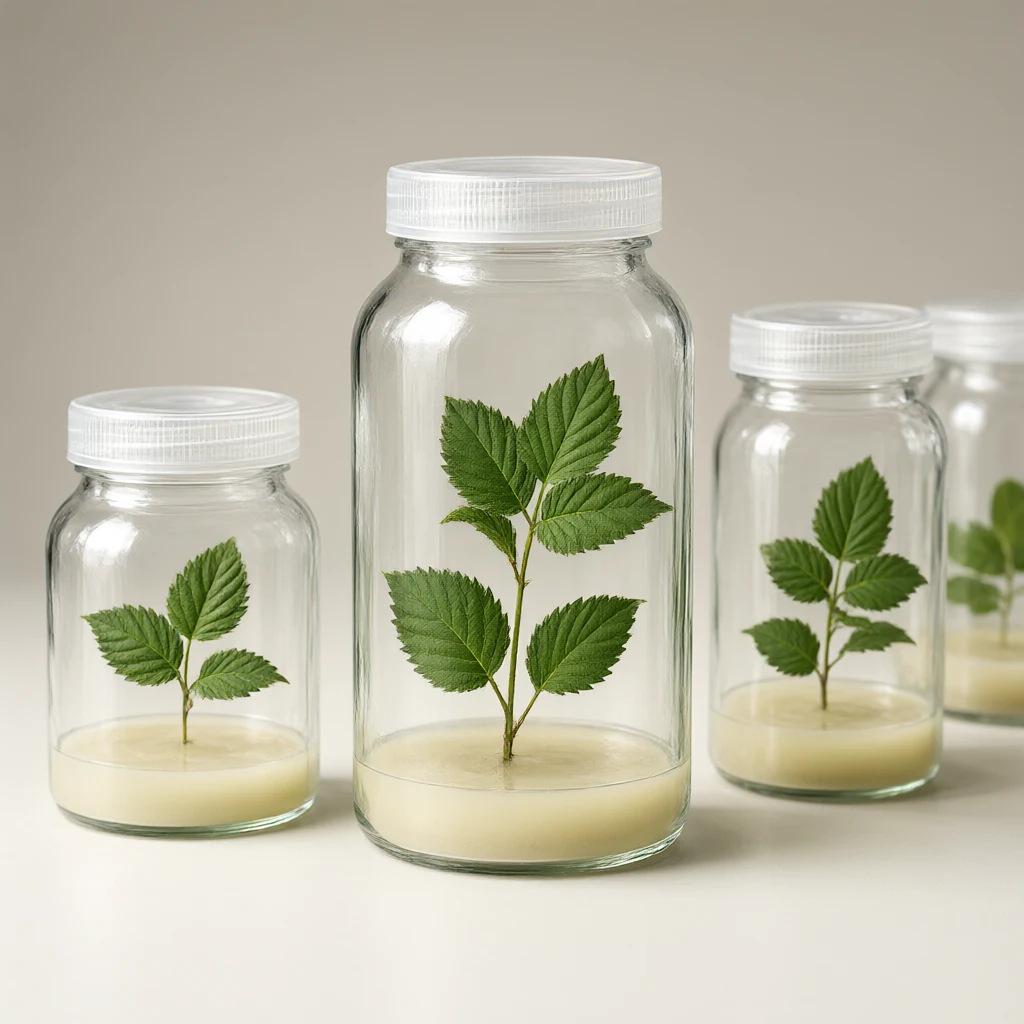
A small shoot inside a jar does not look much like a blackberry harvest. There is no bowl of ripe fruit, no row ready for picking, and no plant large enough to fill a garden space. Yet this is part of the work happening before a spring plant offering can exist.
At Steward Farms, we are growing Ouachita blackberries in tissue culture now toward spring 2027. We intend to sell fresh blackberries and also offer plants for people who want to grow their own. Our objective is a $10 price for each plant, with plant shipping planned. The work between today’s culture and a plant ready for a customer is what gives those plans substance.
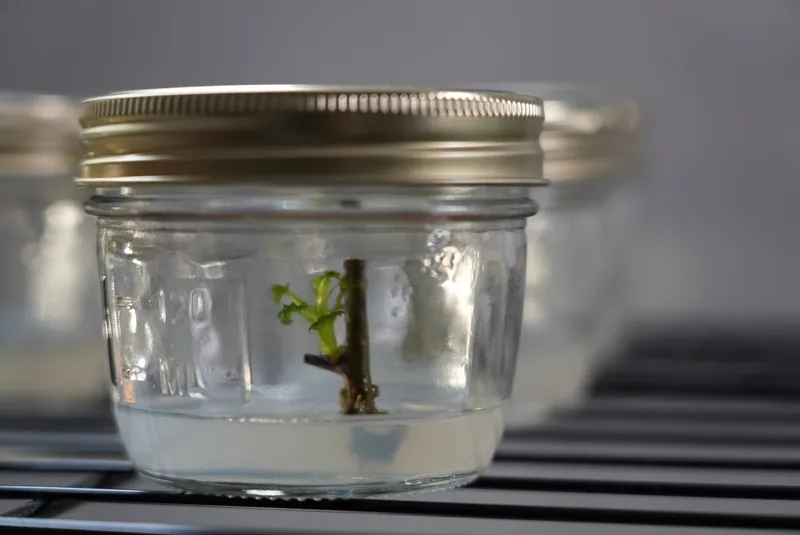
The actual culture photographs in this article come from our MyTCLab image library. They show shoots, jars, and shelf context already used on our own site. They help explain the work without pretending that a picture establishes a batch’s exact date, testing history, or future readiness. A jar is evidence of a stage, not a promise about everything that follows it.
Why grow plants as well as fruit?
Selling fruit and selling plants serve different readers. One person wants berries to eat when a harvest is available. Another wants to choose a site, care for canes, and experience that harvest at home. We want our content to be useful to both, while keeping the two offers clear.
A fruit purchase answers an immediate food question. A plant purchase starts a longer relationship with a living crop. It brings questions about variety, climate, planting stage, water, supports, pruning, and the first season’s expectations. A useful plant offering therefore includes more than a cultivar name and a photograph of mature berries.
Our micro-farming article provides more of the farm’s wider story. Here the focus is the route from propagation work to a plant someone can understand and care for. The spring plan gives that route a purpose, but it does not shorten the biological steps in between.
Keep the variety’s identity attached to the work
Ouachita is a named blackberry cultivar, not a general description for any thornless blackberry. That name needs to remain attached to the material through propagation and later nursery handling. It is part of what a future gardener is choosing.
The University of Arkansas’s cultivar information describes Ouachita’s erect, thornless canes and fruit characteristics. Those traits explain why we can talk about a specific growing choice. They do not make every photograph of a similar-looking leaf a way to authenticate cultivar identity.
Think of identification as a thread running through the production record. If several varieties or batches are being handled, appearance alone is an unreliable substitute for that thread. A useful label answers which material is being discussed before a later question about growth or condition arises. The reader should be able to keep the named variety separate from the general method used to propagate it.
What tissue culture means in plain language
Tissue culture grows selected plant material under controlled culture conditions. Instead of beginning with a seed, the process works with plant tissue and appropriate growing media. The phrase “in vitro” refers to that culture environment; it does not mean the material is already prepared for normal garden conditions.
Blackberry propagation research separates several objectives within that process. A study of the cultivar Brazos illustrates establishment, shoot multiplication, rooting, and acclimatization as distinct parts of the work. It helps explain the sequence, but it is not a tested Ouachita recipe for our farm.
That distinction matters when reading research. A formula or success rate belongs to the material and conditions studied. We can learn from the process without transferring every number to another cultivar or declaring that a paper validates our own batches. The useful story here is what each stage is trying to accomplish and why later stages cannot be assumed from the first one.
Walk through the stages beside the pictures
Use the walkthrough to move from starting material toward nursery growth. Actual owner-site images appear where the library contains a relevant picture. Stages without an appropriate photograph remain explanations rather than receiving a mislabeled jar image.
Try it as you read
Walk from cane to nursery plant
Notice how the question changes. At the start, identity and establishment matter. During multiplication, the focus includes producing usable shoots. Rooting asks for another developmental result. The transition out of culture asks whether the plant can adjust to different conditions.
Those are connected tasks, but they are not interchangeable signs of completion. Counting jars cannot tell the whole story of plant readiness. A clear stage description gives a future customer more useful information than an impressive number without context.
More shoots still means more growing work
Multiplication can make the future planting seem close because the visible material increases. But a shoot count and a count of plants ready for sale answer different questions. The route from one to the other includes rooting, successful transition, nursery growth, and a defined sale stage.
This is why production planning needs room for observation and adjustment. A theoretical maximum calculated from repeated multiplication is not the same as reliable available inventory. A customer needs to know what will be received and when it is expected to be ready, not only what might be possible if every stage goes perfectly.
The same distinction helps readers interpret a shelf photograph. Several jars show an organized part of the growing environment. They do not independently establish survival rates, a delivery week, or the number of plants that will be available in spring. We would rather explain the work plainly than ask an image to carry claims it cannot support.
Roots begin another transition
A rooted plantlet has reached a different point from an unrooted shoot. It still has to move toward the conditions expected outside the culture environment. The word “rooted” is useful, but it should not be treated as a declaration that every following transition has already happened.
The regional caneberry establishment guide discusses nursery plugs and hardening before planting. That is later care for an appropriate nursery stage, not a complete guide to taking raw in-vitro material straight into a backyard bed.
For buyers, the question becomes concrete: what stage will the plant have reached at handoff? A listing should let that answer guide the receiving instructions. Our buying guide explains why plant size, rooted condition, and stage belong in that conversation.
Clean handling and pathogen testing answer different questions
A jar can look orderly while leaving a reader with unanswered questions about the source material and its testing history. Routine tissue-culture multiplication should not be described as automatic virus elimination. The terms need to stay precise because buyers may understand them as a plant-health claim.
NC State’s propagation program describes its own testing before culture introduction and before material is released. The National Clean Plant Network explains therapy and subsequent testing as distinct from ordinary multiplication.
Those examples show what documented programs do; they do not establish that Steward Farms participates in those programs or that every pictured plant has passed a particular assay. We should describe our actual records when such a claim is made. Until then, a photograph and a propagation method should remain exactly what they are, without an added certification implied by the wording around them.
A spring plant still belongs to a seasonal crop
Tissue culture changes how plants are propagated. It does not remove Ouachita’s need for a suitable climate and seasonal development. The cultivar’s estimated 400–500 winter chill hours remain relevant to later growing and fruiting decisions.
Our planting and climate article brings that point together with the winter-chill map and variety comparison. It also covers research on cold-room production using appropriately prepared dormant container plants. That is a different production question from whether a small green plant has completed its transition out of culture.
Keeping the stages separate helps future customers. A young plant can be ready for its defined sale stage without being a mature crop ready to fruit immediately. Its next owner needs realistic expectations for establishment, future canes, and local seasonal conditions. Those expectations belong beside the plant, not hidden behind a photograph of a full harvest.
What the $10 objective means at this point
Our goal is to offer Ouachita plants at $10 each. That is the plant-price objective, not a statement that every destination can receive one for a $10 delivered total. Shipping charges, plant size, packaging, supported destinations, and the readiness window belong to the actual offer when it is available.
We also plan to sell fresh blackberries. Plant shipping does not establish fresh-fruit shipping, and a future plant listing should not confuse those two products. Someone looking for a bowl of fruit needs seasonal availability; someone looking for a plant needs a clear description of what will arrive and how to begin caring for it.
For now, contact Steward Farms for plant-availability updates. Tell us where you plan to grow and what you are considering. An interest message starts a conversation; it is not a paid preorder or a guaranteed allocation.
We propagate plants and thank their Creator
Tissue culture gives us a way to work with plant material; the living world behind that work calls for gratitude. We give Jesus the credit as Creator, following Colossians 1:15–17. Our equipment and records help us tend what He has made.
Ouachita is a modern cultivar developed through plant breeding. Our Christian conviction concerns the Creator of the plant world, not a claim that this named variety existed in Eden. Learning propagation is one way we can care for plants and make them available to more gardens while speaking honestly about the stage each plant has reached.
The work continues beyond the jar
The small shoot is a beginning worth showing. It lets readers see that a spring plant offering starts earlier than a sales announcement and involves more than placing a name beside an order button. It also gives us a way to explain each stage without making it sound more finished than it is.
The next useful question belongs to the gardener: what will the plant need after it reaches home? Our first-year guide follows roots, canes, and expectations beyond arrival. The propagation story reaches its practical purpose when the future owner understands that next part too.
We are growing the plants now. The aim is a spring start that gives people a clear, honest route from a named Ouachita plant to a garden they can learn to tend.
A reader question
Does tissue culture automatically mean virus-free plants?
No. Routine multiplication, virus-elimination therapy and pathogen testing are distinct. We make no batch-testing claim from a jar photograph.